| OCR Text |
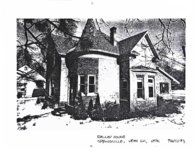
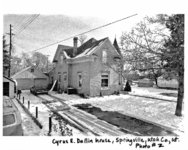
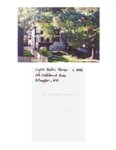
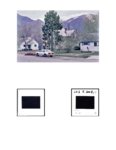
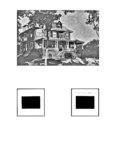
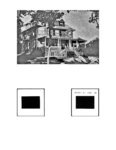
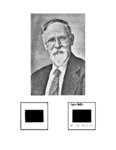
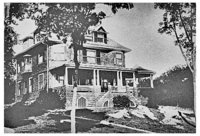
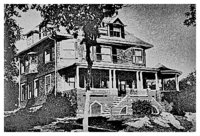
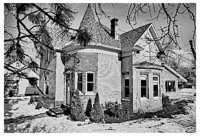
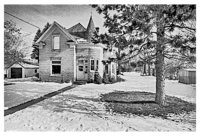
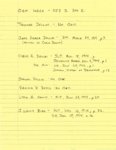
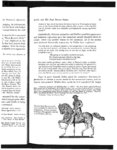
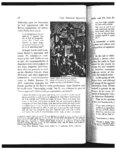
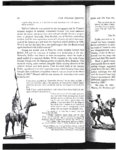
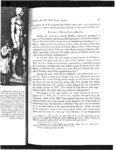
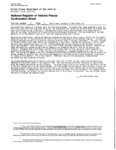
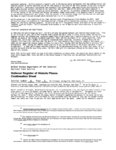
Show sculptural subjects. Dallin's generally romantic work in the Western genre corresponds with the anthropological and romantic studies of native Americans during the late decade of the 19th and the first decades of the 20th centuries. Many of Dallin's indian works have became near household-like iconography, some enduring and proliferating to the point where original artistic attribution has long since been lost. Many of his works are deeply embedded in America's collective sentiments regarding native Americans. For Dallin, his artistic production found inspiration in the Ute indians of his childhood and through the western themes experienced in his mountain home of Springville. As one national biographical work stated, "from the grander of the mountain scenes [Dallin] absorbed and developed the ideas of si~licity and strength which characterized his art in sculpture." 13 Dallin worked was in the tradition of his older and more noted friend Augustus Saint-Gaudens (d.1907). Both followed the Beaux-Art tradition of "idealized realism" although Dallin rejected the customary lure of classical themes for distinctly American subjects. Dallin's art was still inescapably French, with most of his art posed in a "somewhat classical style." Dallin succeeded Saint-Gaudens as one of America most noted adherents of Beaux-Art sculpture. 1<4 Historical Background and Significance By 1905 when the Dallin house was built, Dallin's art work had gained national and international recognition. Prior to its building in 1905, Dallin had returned from a second period of study in Paris, France (1899) and had won numerous national and international sculpture co~etitions (A gold medal and a honorable mention at the Paris Salon, 1888-90: an award at the Chicago Columbian Exposition, 1893: and the Gold Medal at St. Louis Exposition, 1904). Also by 1905, Oallin had a number of nationally recognized works installed, including: Brigham Young and the Pioneers, Salt Lake City, 1892 and 1900: the bust of Sir Isaac Newton at the Library of Congress, Washington, D.C., 1895: and the equestrian statues Signal of Peace in Lincoln Park, Chicago 1890 and Hedicine Han in Fairmount Park, Philadelphia, 1899. During the 1895-96 school year Dallin was invited to teach at the Drexel Institute in West Philadelphia. In 1900, Oallin began teaching sculpture at the Massachusetts Normal Art School (Arlington, Ma.), a position he would hold for over forty years. Dallin's 1905 gift of a new house offered to his mother came in the wake of this success. After 1905, Dallin would embark on some of his most celebrated sculpture works: the equestrian statue Appeal to the Great Spirt (began 1905, installed 1909 at the Boston Museum of Fine Arts) and the municipal Revolutionary War monument, NPS Fonn 10-900-a (8-86) Utah WordPerfect Format - X See continuation sheet OM8 No. 1024-0018 Un;ted States Department of the Inter;or National Park Service National Register of Historic Places Continuation Sheet Section number 8 Page 4 Dallin House, Springville, Utah County, UT. Soldiers and Sailors (began 1906, co~leted and installed 1910, Syracuse, New York).16 The Dallin House is distinctly associated chronologically with Dallin's most productive and celebrated career period (1900-1944).18 Oallin resided in Arlington, Massachusetts during most of his professional life, yet the17 artist made frequent trips, often yearly, to visit his mother, extended family, and his native city of Springville. Throughout his adult life Dallin had essentially "two homes," the first, Arlington and the greater Boston area and the second, 18 Springville, Utah. After building the house, Dallin financially supported his parents in the house (as he had done previously): his father until his death in 1909, his mother until her death in 1919, and his younger brother Samuel and family who lived in and care for their aged mother until her death. Samuel Oallin eventually acquire 13 National Cyclopedia of Amerlcan Biography (Ann·arbor Michigan, University Microfilms, 1987) v. 14:478-79. One example of the pervasive popularity of Dallin's Imagery Is Appeal to the GreaJ Spirit. Some of DaJlln's other 'ennobllng and claaalcaJ realist depictions of the Amerlcan Indian' Include Signal of Peaa., Medicine Man, and Scout.' Swanson, 85, also ... attached listing of wor1ao. 14 Some noteworthy exampl.. of worlca executed Include Massaso/t (1911, Pllgrlm Hall Museum, Plymouth, this heroic size Indian figure OIIenooks hlstorlc Plymouth Bay), General WlntleldS. HanCOCk (1913, Gattyaburg, Pao), Anne Hutchinson (1915, Boston Statehouse) and Chl&f Joseph (1928, New York Hlstorlcal Society). Frances, Cyrus E. DaJlln, 241·245 and Swanson, 10, 102 and 185. 15 FranCiS, Cyrus E. DaJlln, 241-261 and Swanson, 85. 16 DaJlln continued as apopular sculptor until his dealh atthough other rlslng Amerlcan sculptor gradually eclipse DaJlln (and his contemporarl..) reputation among art critics beginning In the nineteen-teens. Swanson, 85-101 • 17 18 Francl., Cyrus E. DaJlln, 183. Swanson, 102. DaJlln'. devotion to Sprlngvllle Is also exemplified In the many art worlca donated to the community. See Springville Art Museum registry also In Swanson. DaJlln was also Involved In varlous business ventur.. with his family which required hi. attention In Sprlngvllle. Francis, Cyrus E. Dallln, 162·164. |