| OCR Text |
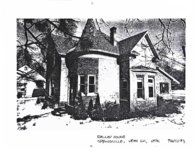
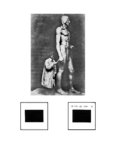
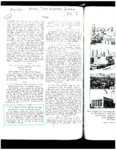
Show 6 Utah Historical Quarterly The memorable Indian equestrian statue, Appeal to the Great Spirit, once almost as popular as the Statue of Liberty, still stands in front of the Museum of Fine Arts in Boston. His M assasoit at Plymouth, Massachusetts, is also remembered for its vivid portrayal of a Native American. In Utah, Dallin is represented by his monument Brigham Young and the Pioneers in downtown Salt Lake City, the Angel Moroni on the spire of the Salt Lake Temple, a replica of M assasoit on the State Capitol grounds, and his Pioneer Mother at the Springville City Park. The story of Dallin's struggle to gain acceptance for his Revere statue-once described as "perhaps the most incredible tale in the history of American art" i-has never been fully told, nor has the controversy been unraveled satisfactorily in previous accounts. After careful study of original sources, most of the story has been reconstructed here. EARLY TRAINING IN UTAH While the Indian, not Paul Revere, was Dallin's principal subject, the Revere equestrian was his obsession. It was his first and last major work. Dallin himself believed it to be his masterpiece out of some two hundred fifty works, including several public monuments. In his persistent, fifty-six-year effort to get Boston to erect his Revere statue, Dallin often reflected upon his youthful inexperience and humble beginning in the West. When one of his Boston critics asserted that Dallin "came from the Godless city of Salt Lake and must be a Monnon," 2 the sculptor denied that he or his parents were members of that church. But it was true that his grandfather, Tobias Dallin, and his father, Thomas, sailmakers from England, were converted to Monnonism in 1849 by a missionary, Cyrus Wheelock, from whom young Cyrus was to receive his name. Dallin's father met his mother, Jane Hamer, also a Monnon emigrant, when they crossed the plains to Utah with other pioneers in 1851.8 1 Leo Rabbette, "Ashes of Famous Blaze over Paul Revere Are Rekindling," clipping from an unidentified Boston newspaper ca. 1930, Cyrus E. Dallin Collection, Robbins Library, Arlington, Mass. • "Says Hub's Elite Lost Him Award," unidentified Boston newspaper, March 7, 1936, clipping in Dallin Collection. 3 Information on Dallin's family and his childhood comes principally from a variety of clippings and other materials in the Dallin Collection, including Vittoria Colonna Dallin, "The 'Creat Spirit' and Cyrus Dallin," typescript. Other sources include: Smithsonian Institution, Archives of American Art, Northeast Area Office, Boston ; Martin K . Bovey's typescript biography of Dallin in Bovey's possession, Chelmsford, Mass. ; and family records in the Genealogical Library, Church of Jesus Christ of Latter-day Saints, Salt Lake City. Dallin and His Paul R The DaIlins . tIed in the small frontier Springville, fifty miles Salt Lake City. Here and oldest of nine bom on November 22, 18 iog cabin surrounded by wan intended to keep out Indians. Cyrus, better "Bird" or "Birdie" by his playmates, learned with the Indians, . and shoot their the outdoors was .aSSlrOOlm and studio. The ~satch Mountains, so fonn, fascinated him animportant~~LluL"u In their shadows he tes from clay he such an environment but it was from his art: I owe ·my art to my childhood days she oven. It was a case of and modeling when just gave me every <"1\_VUla~;"" 1 At eight years of age, where he excelled only in additional education, sponsored by the that they could faith, changed The townspeople first modeled a clay bust heads of Joseph prophet and the two martyrs in a I . • Harold H. Jenson, "True Pj I |