| OCR Text |
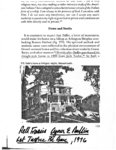
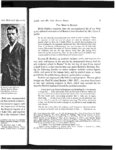
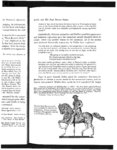
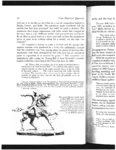
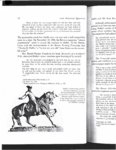
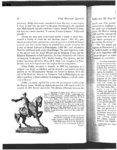
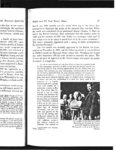
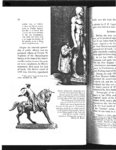
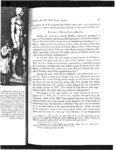
Show lh Historical Quarterl), Dallin and His Paul Revere Statue ne to spling out of the d admired .... le erection of a statue e commission be given Cyrus to take the job. Believing this to be an infringement upon his rights, the young sculptor refused to be bound, and quit his job with the terracotta works. In May 1881 Dallin moved to Quincy where he lived and worked with Morse for fifteen months making cemetery statues and reliefs for a granite company. Sidney Morse, a native of Ohio, sympathized with anyone struggling for an art education. He greatly influenced Dallin's intellectual and artistic development by encouraging him to read the philosophical works of Goethe, Emerson, Kant, and other great authors. Morse also introduced Cyrus to important Bostonians, including Martin Milmore, the sculptor who had made the Civil War Memorial on Boston Common; and Wendell Phillips, who with Morse edited and published the Radical Review, a magazine devoted to reform ideas. Phillips, who made caustic criticisms of Boston's elite sculptors, took a liking to young Dallin and later came to Cyrus's defense in the Revere statue controversy.tZ In September 1882 Dallin returned to Boston where he soon rented a studio at 16 Pemberton Square, across the river from Charlestown, sharing the quarters with George Peterson, a fellow pupil of Bartlett's. During the remainder of the year he made a plaster bust of E.H. Clement, editor of the Boston Transcript, and a statuette of the famous comedian William Warren. Additionally, Dallin produced a relief bust of Oliver Wendell Holmes; six half-size copies in plaster of the bust of Hermes by Praxiteles for Moyes and Blakeslee's store; and some heads to be used as models in the window of Jordan and Marsh's department store. These works and previous subjects steadily matured Dallin's sculptural ability, but they seemed to offer little preparation for the important equestrian statue that was to follow. {ashington Street studio udio. Here Dallin made Ie Louis Barye, a French y reproducing the model s. He earned additional ston Terra-cotta Works. lollars, was a seal for the :w building in Boston. Cyrus was permitted to edding his teacher had ness, however, Bartlett rshness toward the boy. 'iended by W.C. Griffin im to Vittoria Colonna nine years later. Vittoria ned Bartlett's behavior: ; ideas, and naturally, he academic and conIt the independence of hy between them. t t )k Bartlett's advice and earning four dollars and is rough work that inter:tal visits to the studio, abroad to study, but the luragement. During this H. Morse, a student at lance to work with him sachusetts. When Dallin tive tea.cher strenuously lartlett would not allow in," pp. 11-12. See also DaHin Lited 50 Years to Model Statue 11 THE REVERE STATUE COMPETITION In February 1883 Cyrus Dallin began an equestrian model of Paul Revere which he completed in six weeks. It is not known when Cyrus learned of the Revere statue competition, sponsored by a committee of well-known Bostonians, representatives from the Massachusetts Charitable Mechanic Association, the Massachusetts Grand Lodge of Free Masons, and the Revere family. However, the committee did issue circulars in 1882 inviting artists to send in models by April 19, 1883. The "A.J. Philpott, "Dallin's Death Recalls a Distinctive Art Era," New York Times, November 15, 1944; DaHin Biographical Manuscript, p. 5; William Howe Downes, "Monuments and Statues in Boston," Nell' England Magazine 11 (1894): 354,369. . |