| OCR Text |
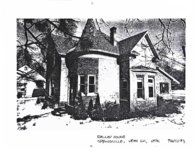
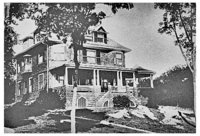
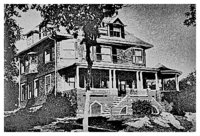
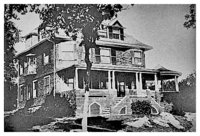
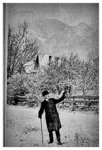
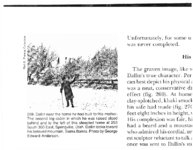
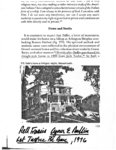
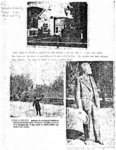
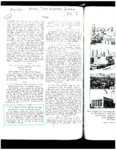
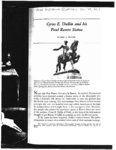
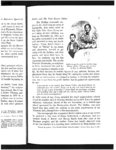
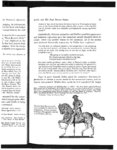
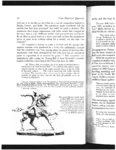
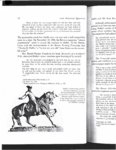
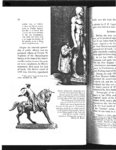
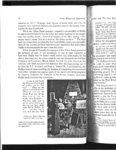
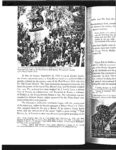
Show 26 Utah Historical Quarterly previously. Dallin facetiously remarked in later life that, in one respect at least, he had "put one over" on the great Michelangelo. He explained that Michelangelo had also admired a woman named Vittoria Colonna, but they were never married. "I won my Vittoria Colonna," DaHin said proudly.52 During the next nine years Cyrus started a family of three boys: created a variety of works for the Mormon church (1891-93); produced several private commissions; entered equestrian models of famous generals and other public figures in competitions; taught sculpture for a year at Drexel Institute in Philadelphia (1895-96); and returned to Paris for additional study under Jean Dampt. The most important works of this period were the Angel Moroni and the Brigham Young and the Pioneers Monument at Salt Lake City; Sir Isaac Newton for the Library of Congress, Washington, D.C., Bertha Cushing, Don Quixote, and the Indian equestrian Medicine Man, all of which were completed in Paris. Sixteen years had elapsed since the original Revere competition. When DaHin returned to America in 1899 his reputation as a sculptor was firmly established, and he secured a permanent teaching position at the Massachusetts Normal Art School in Boston. With the sale of his Medicine Man to the Fairmount Park in Philadelphia he was able to purchase a fixed residence in Arlington Heights, a suburb northwest of Boston. 5a DaHin was again hopeful that a new city government would accept his Revere statue. Modifying slightly his previous stiff-legged model, he created his fifth Revere equestrian. The obvious difference between the II "Decorated by Pupils, Pretty Feature of Vittoria Murray's Marriage to Edwin Dallin," unidentified clipping in Dallin Collection; "Famed Sculptor, Native of Utah, to Attend Unveiling," DeseTet News, July 22, 1932. 13 V.C. Daliin, "The Family of Cyrus E. Dallin," p. 21. The school where Daliin taug}lt is now called the Massachusetts College of Art (Brookline and Longwood). While DaUin had sold Medicine Man, the money would not be available until the statue was delivered. Therefore Dallin turned to a Utah organization to ask for a cash advance. See Dallin to Heber M . Wells, October 28. 1900, Brigham Young Monument Association Manuscript File, LDS Archives. Dallin presented this plaster model, his fifth Revere sculpture, to the Springville public schools in 1903. It and a painting by John Hafen gave birth to the Springville Museum 01 Art. Photograph by Rell C. Fra1lcis. action were to be mayor promptly a erecting the statue. t•4 The new model w other important ript gave its its completion: . .. It will be remlem;oer~ for this monument met time being allowed to sculptor, had received for the statue, especially eluding St.-Gaudens) .. prise, and never ceased in season and out, judgment of the he had made of it a work well worthy prominent location in ton. The statue, thus proved, is one in mobility and dramatic are well blended with monious lines and poise. The horse, pulled up by his rider, a most spirited and esque type of movement; and the tude and gesture of man tell the stirring of Revere's errand to Middlesex minutem with sufficient but without violence bombast. The original |