| OCR Text |
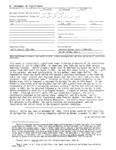
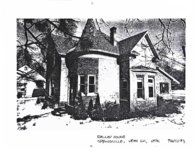
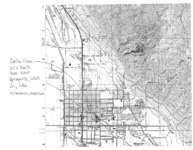
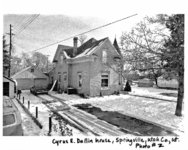
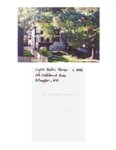
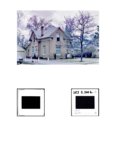
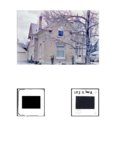
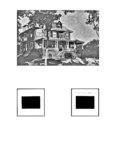
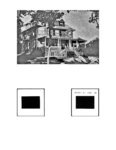
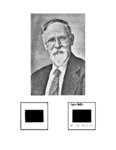
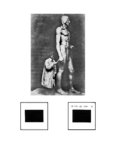
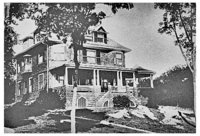
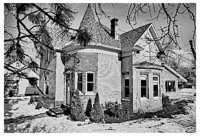
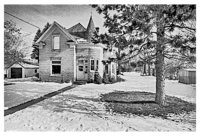
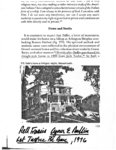
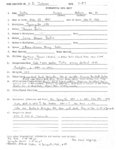
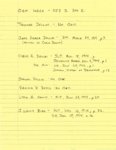
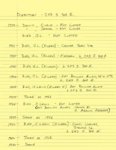
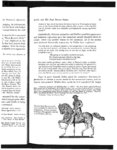
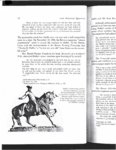
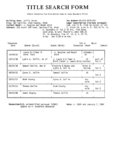
Show OM8 No. 7024-0078 NPS Form 100900-a (8·86) Utah WordPerfect Formal United States Department of the Interior National Park Service National Register of Historic Places Continuation Sheet Section number 8 Page 3 Dallin House, Springville, Utah County, UT commission ~nd political wrangling, Dallin would not see his Paul Revere installed until 1940. The Boston Competition began his career and it essentially saw the closing of it -- he died four years later in 1944. Between his winning of this competition and the statue's eventual installation, Dallin became one of American's most well known sculptors and academics. He won numerous prizes and awards. Some of his most noted works include Signa 7 of Peace (1890, Lincoln Park Chicago), Medicine Man (1899, Fairmount Park, Philadelphia), Anne Hutchinson (1915, Boston Statehouse), Appea7 to the Great Spirit (1909, Boston Museum of Fine Arts), Brigham Young and the Pioneers (1892, Salt Lake City), and Massasoit (1911, Pilgrim Hall Museum, Plymouth). Dallin's career matches chronologically that of Frederic Remington (1861-1909), although Remington died much earlier in middle age. Where Remington celebrated the cowboy, Dallin celebrated and venerated the American Indian. Although equestrian and indian subjects were his primary interest, his work involved the full breadth of sculpture. Corresponding with the anthropological and romantic studies of native Americans during the first decades of the 20th century, Dallin's indian works became near household-like iconographic images, some enduring to the point where artistic attribution has long since been lost. Many of his works are deeply embedded in America's collective sentience. For Dallin, his artistic production found inspiration in the Ute indians of his childhood and through the themes experienced in his mountain home of Springville. This house was constructed c. 1905 by Cyrus Dallin, for his parents Thomas and Jan Dallin; notwithstanding, the focus of the gift was primarily the sculpture's mother. The house was reportedly desi~ed and built by Springville contractor-architect Lewis J. Whitney (1874-1954). The house remained in the Dallin family until 1938, when it was purchased by J. Lewis Bird, a Springville businessman. Shortly after the Bird family acquired the house, the rear kitcher-bathroom addition was constructed and the house's original cellar was enlarged. 1 After the death of J. Lewis Bird in 1975, the house was neglected and deteriorated. In 1992, the house was purchased by J. Douglas and Naomi Bird, son and daughter-in-law of J. Lewis Bird and restored. See continuation sheet 9 Francis, "Paul Revere." 1-36. 10 Interview with Rell G. Francis by the author, January 4, 1994. See also Francis Cyrus E. Dallin, Let Justice Be Done, 162 and 226 and obituary, Lewis J. Whitney, Tribune (Salt Lake City, Utah), September 19, 1954. In 1922 Whitney volunteered his services to Springville City and Cyrus E. Dallin in building a foundation pedestal for Dallin's World War I monument Victory Memorial 1910. The pedestal has since been replaced. 11 Interview by the writer with the present owner J. Douglas Bird, who is a son of J. Lewis Bird, 23/07/93. See also the title search form attached, the Pre-development Evaluation which was conducted by the writer, and the Intensive Survey (1984) findings, SHPO Office, Utah State Historical Society, Salt Lake City. |