| OCR Text |
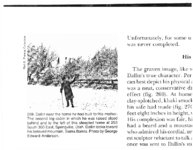
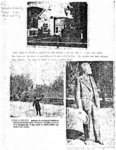
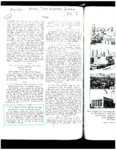
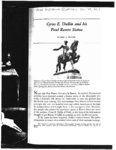
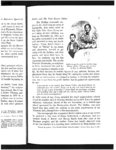
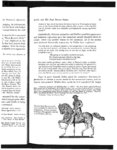
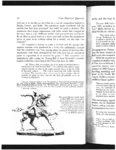
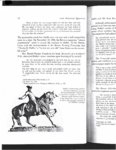
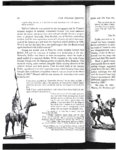
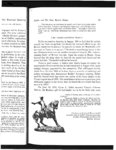
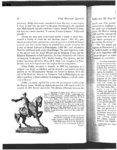
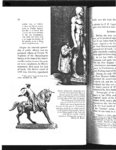
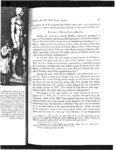
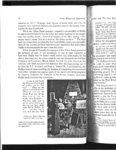
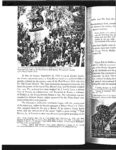
Show llin and His Paul Revere Statue 29 plaster by P. P. Caproni and Brother after 1907, and hundreds of . were sold to schools and other collectors in the years that followed."o; INTEREST IN REVERE STATUE REVIVED 1e: Dallin with Massasoit, now Coltls Hill, Plymouth, Mass. A aster cast of the famous Indian rl 0/ the Pilgrims was presented tall March 20, 1922, by Dallin. For many years it stood in the tla of the State Capitol. In it was cast in bronze by the G. Morgan, Sr., Foundation stallds on the south grounds Callitol. Photograph courtesy Hafen-Dallin Club. Left: the sixth Revere model, location . Photograph wurtesy of . Martin K. Bovey. During the next three decades Dallin's reputation continued to grow, as he produced significant public monuments and Indian subjects. Two of the works from this period were installed on prominent sites in Boston: Appeal to the Great Spirit in front of the Museum of Fine Arts , and Anne Hutchinson in front of the State House. Only the Revere statue remained out of reach. Each year when Boston reenacted Revere's ride, Dallin reportedly would go to his studio, uncover his Revere model, and reflect upon his bitter disappointment. 5, In the late 1920s the news media revived interest in the Revere monument and again took up the plea to have Dallin's statue erected. With the New England tercentenary approaching, responsible citizens ' of Charlestown recommended that Dallin's statue be placed at the City Square in Charlestown, a spot near where Revere's famous ride originated. Nothing came of this suggestion, however. 58 During the early 1930s, Dallin exhibited a new model of Revere at . the New Museum Galleries in Boston. This sixth equestrian somewhat resembled the award-winning model except for the horse's front legs, its raised tail, and the full cape of the rider. It is possible that Dallin developed this idea over a period of years, because his wife recorded in her family journal of 1912: "New' model of Paul Revere with cape." Unfortunately, Mrs. Dallin offered no additional information. 59 Photographs of the sixth model were widely printed in the newspers of the 1930s, and, in most cases, captions referred to it as the , original" model of the 1880s. One sculpture historian, the late Loring Holmes Dodd, used a photograph of this model in one of his articles to ' 'aemonstrate that this statuette was Dallin's "first and what he intended '. to be the final model of the equestrian Paul Revere." Dodd was fond ,;. of the "stirring" action of the horse which "must skid several paces ';"}.\ before he can come to a full stop," and, therefore, he was disappointed .. !~; :~;'tl "'. Appleton to Dallin, January 10, 1903, Dallin Collection; P.P. Caproni and Brother, Capron! Casts: American Indians Q.nd Other Sculptures by Cyrus E. Dallin (Boston: P.P. ~aprom a~d Brother, 1915), catalog in Boston Public Library; Thomas Carens, "Paul Revere tatue DeSigned for Copley Sq. Never Erected," Boston Herald, April 18, 1927 . .. Carens, "Paul Revere Statue." Unidentified news clipping dated April 20, 1927, Dallin Collection; "Paul Revere," Journal'" and Year Book for St. John's Church Fair 19 (1929) . .. "Patriot Unhonored," October 1933. |