| OCR Text |
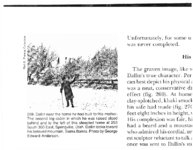
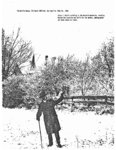
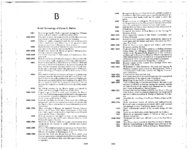
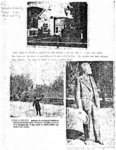
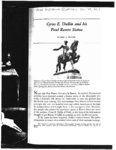
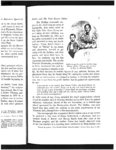
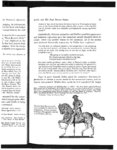
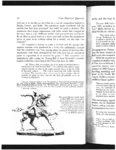
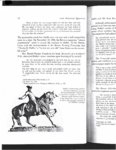
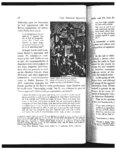
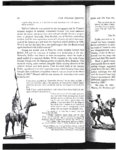
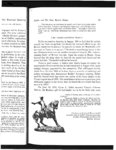
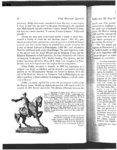
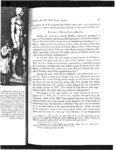
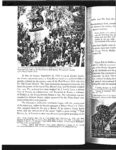
Show 'tah Historical Quarterly Dallin and His Paul Revere Statue the first time and were hen nearly 23 years old. rent the final ordeal of lile they were discussing I declared their intention Although abbreviated, his name, "C.E. Dallin," had been correctly printed in at least one newspaper, the Boston Herald, that reported that young Dallin's model of Revere had been warmly praised by eminent artists whose opinions had been requested by the statue committee. 31 The committee had called for expert opinion because: ar and a half competition levere committee "almost ::> Dallin. To his dismay, Evening Transcript that om Utah was the successMemories of a Sculptor's learning of his award: ct that he was not an as an outsider and that somewhat discouraged :l under his door. This m Dan French, saying, t model. I'm glad you 1.209. Dallin's third model, present location unknown, won the ~evere monument contract for youthful sculptor in 1884. His favorite of the Revere models, vas lost while he was stud'ying Paris. Photograph courtesy of the Robbins Library. 19 the monumental statues of Boston have been so severely criticised by some persons that the committee who had charge of the proposed Paul Revere statue were determined to act with caution, and before accepting Mr. Dallin's design they secured the opinion of more than twenty prominent artists and connoisseurs. One said, "The horse is marvellous; the pose is splendid." Another wrote, "The general effect surprised me as being very speaking and decidedly monumental." A third declared that "it is a spirited work of art, and if carried out will make a statue of which we should be proud." 3S The Transcript announced that Dallin's model would be cast into plaster and exhibited at some prominent place in the city. Additionally this newspaper made the following appraisal of the Revere group: This is not a statue of Paul Revere, but one in which Revere is a happy accident. It may be said to represent, in a deeper sense, the fire, enthusiasm and patriotism of the Revolution. The motive of the work is the famous incident in the life of Paul Revere-his memorable ride to Lexington . ... The face of the rider in an ideal conception and not a likeness of Paul Revere, though there is some resemblance in the general shape. The body is that of a vigorous man, and determination seems to be expressed in the whole carriage of the figure intended to commemorate the act of the Revolutionary patriot. 36 The Boston Advertiser best described Dallin's third model, with particular emphasis upon his horse: ... The narrative character of the composition is its strong point. The horse, a powerfully built animal, has been pulled up so short that he still preserves some of the momentum of his furious flight, and is full of spring and fire, elasticity and quivering life. His noble head is brought back close to his breast, the neck sharply arched, the mouth opened, by the force of the rider's restraint, and one may almost hear him pant, so well expressed is the impression of suddenly arrested motion. The left foreleg is lifted as high as possible from the ground, while the right hindleg is still in the air.... The mane is long and abundant .... A thick forelock flies out between the ears, which are laid back. ... . . . We think Mr. DalIin has comprehended the spirit of the incident, expresses its picturesque phase well, and has given us a dashing work, well .. November 20, 1884. " "The Paul Revere Statue." .. Ibid. |