| OCR Text |
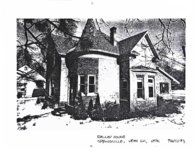
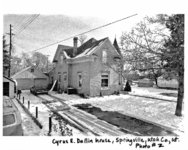
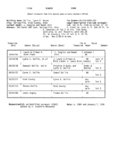
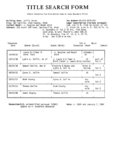
Show father. 1 These two rooms are divided by a large load bearing foundation wall with an adjacent foundation for the first floor hearth and subsequent chimney construction. Both rooms have concrete floors. The foundation wall, parging and plaster in the first room appears original and unaltered. From the concrete floor up to approximately two feet, the plaster has completely deteriorated. Above this point selected areas of the plastering has lost its key, having separated from the fieldstone wall. There is four to eight inches of disintegrated plaster and mortar in a continuous pool around the perimeter of this room -- indicating the foundation, particularly the lower wall, has been saturated by rising damp. Also, some foundation rocks are partially dislodged and protruding from the wall. The foundation walls in the second cellar, exposed when the room was excavated in 1938, was reinforced with a concrete shelf. This large concrete shelf (approx. 5 ft. high from the floor and 2 1/2 ft. broad) and the exposed original foundation (up to the floor joists) was completely covered with cement mortar. Because of this concrete shelf, I was not able to determine if the same mortar deterioration has occurred in the original fieldstone foundation. The remaining sub-floor has a narrow crawl space that is not readily accessible. The same symptoms described above for the northwest corner and west foundation walls also appear on the southwest corner and for much of south foundation wall, suggesting the same condition exists there. Because of the narrow crawl space, I was not able to inspect the interior foundation walls in these areas. This moisture penetration may have been caused one or more of the following conditions: (1) poor quality mortar or workmanship in the original construction, which seems to be somewhat suggested here; (2) a failing roof, which has occurred to this building; (3) constant or intermittent rise in the water table, which has occurred frequently during the last decade; (4) subterranean springs, which could exist since the property boarders Springville's Hobble Creek; (5) or constant weather run-off from conductor pipes discharging next to the foundation walls. Nearly every condition may apply to this house. The upper load bearing wall system is adobe brick, two wythe thick, faced with a better grade of common brick with a cementbased mortar. The two brick types are tied with barb-wire ties The present owner Doug Bird, who is a son of J. Lewis Bird, indicated that this second basement room was excavated and finished at this time. See also the title search form for the Dallin/Bird residence, Intensive Survey, 1984, SHPO Office, Utah state Historical Society, Salt Lake City. |