| OCR Text |
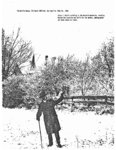
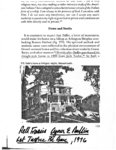
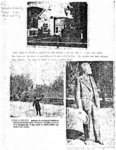
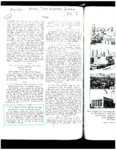
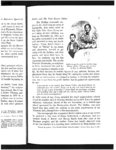
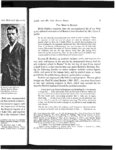
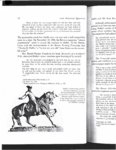
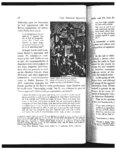
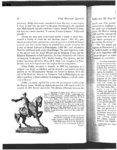
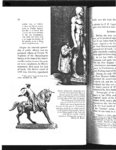
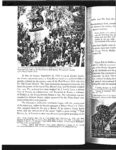
Show 8 Utah Historical Quarterly had been a bodyguard for Joseph Smith. 5 At age fourteen Cyrus "had a definite purpose to be an artist," 6 but without formal training he sketched from nature and copied from available prints. In the spring of 1879 Dallin went to work at his father's silver mine, the Golden Bell, a speculative venture in the Tintic Mining District about thirty-eight miles southwest of Springville. One day the miners struck a vein of soft white clay that Cyrus, with improvised tools, modeled into two life-size heads of a man and a woman. These busts, which were exhibited that fall at the territorial fair in Salt Lake City, attracted the attention of the Tintic miners and citizens - partic- Dallin sculpted this head at age eighteen, shortly before he left for Boston. Photoularly Levi E. Riter, wh0 graph courtesy of the Robbins Library, owned a store in Silver City, Arlington, Mass., loan ed by Lawrence and C.H. Blanchard, a Bos- Dallin. tonian who had mining interests in the area. Both men recommended that Cyrus should have the opportunity to go back East to study sculpture. The Da'llins favored the proposal, but they had no means to support such a pretentious effort. Blanchard, convinced of the importance of having the boy receive the finest education, enlisted the financial support of a wealthy mine official, Joab Lawrence of Salt Lake City, and together they raised enough money to send young Dallin to the sculpture school of T . H. Bartlett in Boston in April 1880. 7 • When Father Dibble, as Philo was called, saw young Dallin's clay busts he predicted that the boy would make busts of the Smiths for the temple. DaIlin's persistent attempts to make the Smith statues would suggest that he was aware of Dibble's prediction. • James W. Reardon, "Cyrus E. DalIin," Boston Sunday Advertiser, June 7, 1931. • Additional biographical sources on Dallin include: William Howe Downes, "Cyrus E. Dallin, Sculptor," Brush and Pencil 5 (1899); Don C. Johnson, A Brief History of Spring- Dallin and His Paul R< 1 Birdie Dallin's transi to the cultured environme Dallin: So the boy from the mal he expected to find tht people talked as they di( heart-rending for the hOI those of loneliness, disil money. He entered the s art criticisms, but not bestowed on his talentec was occupied in chores b) Truman H. Bartlett, . was fairly well known in only sculpture school in ] a small head of a tiger th: ing the following months reliefs, and parts of the 1 provided by the public libr Bartlett was impresse teenage son, Paul Waylan at this time studying scu empathy Bartlett expresse< . .. I have had in my Set a young lad .. . from Sp board is paid by his fami! He has made such en about him. ... As his fat he can afford to pay his is free, and all that he n with clothes. The lad has a fine talen an honor to himself and .. ville, Utah (Springville, 1900) , pp New England Magazine 48 (19 J Tullidge's Quarterly Magazine 3 Dallin, Mother of the Sculptor," "Cyrus Edwin Dallin," Young UHaf~n-Dallin Club, Springville Mu Dalhn Biographical Manuscript, ho • V . C. Dallin, " The 'Great S • Wayne Craven, Sculpture Pp. 428-29, contains infonnation OJ |