| OCR Text |
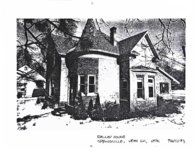
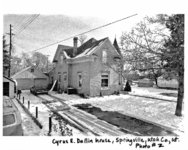
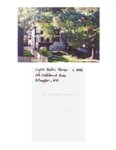
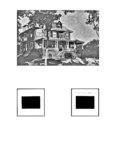
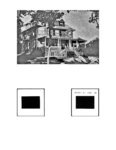
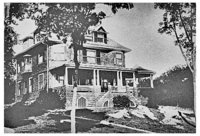
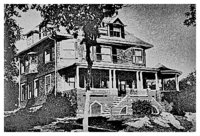
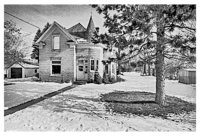
Show cement strength and aggregate size to the existing mortar. The joints should be hand scraped, clean to a depth of at least 2 times the joint's height. A power saw should not be used to clean out the joints which could seriously damage the soft brick. Any loose or deteriorated brick should be reset or replaced. The depth and shape of the pointing should match the existing joints. After the foundation has been stabilized and the exterior walls repaired, repointed and well cured, cleaning the exterior may be considered. The brickwork is only moderately soiled, except around the front door, where water has constantly splashed on the rough faced decorative brick. It is recommended that the exterior surface be cleaned only with a soap-and-water with nonmetallic bristle brushes. A small amount of liquid nonionic detergent, such as dish washing liquid, could be added to the water. A garden hose and a low volume, low pressure (1/3 gallon per minute), wide-angle sprinkler could be used to wet and rinse the walls. Harsh chemical washes and/or pressurized solution strays are not recommended because of the high soluble two wythes of load bearing adobe brick inside the wall. Wooden Frame Inspecting the frame visually, I found no evidence of deflection in any load bearing timber components. There appears to have been adequate ventilation in the attic and sub-floor areas throughout the life of the building. The floor joist and roof trusses appear sound with two minor exceptions. Some of the first floor joists are migrating away from joist pockets particularly near the west wall because of the deteriorating foundation. This is slight but it should be noted. Stabilizing the foundation walls should arrest this movement. I also found evidence of insect damage (termites): channeling, pulp waste, and some limited structural damage to one floor joist in the basement near the cellar entrance (first joist as you enter the basement). The insects appear to have entered up through the center foundation wall. The damaged noted does not appear active. This joist should be structurally reinforced. I also recommend a professional exterminator examine the house to determine if this is an on-going problem. The estimated cost for extermination services is between $400 . 00 -500.000. The estimated cost for reinforcing the existing joist should not exceed $250.00. This includes lumber, plus carpentry labor for butting-in the new support to the existing joist, and masonry labor for rebuilding the joist pockets. There are missing and broken facia and soffit boards on the front gable due to water damage. Matching the original molding may be a difficult task. One avenue that may be taken is, removing sections of the existing molding from the north gable and applying it to the more conspicuous front gable of the house. |