| OCR Text |
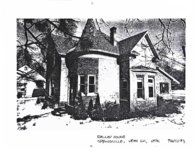
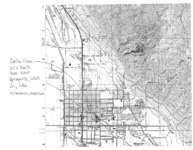
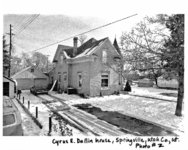
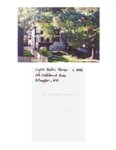
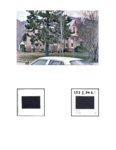
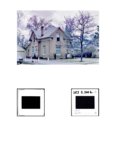
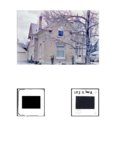
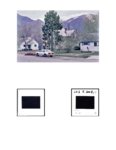
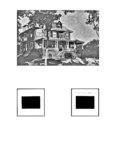
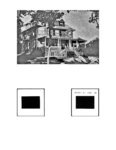
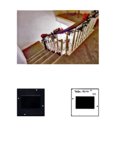
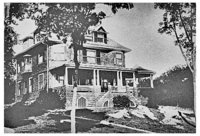
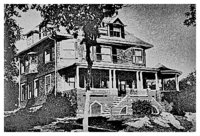
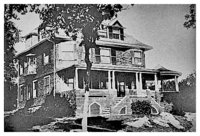
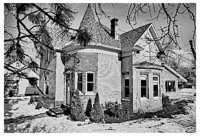
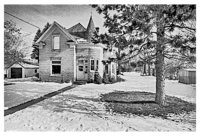
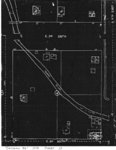
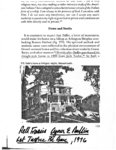
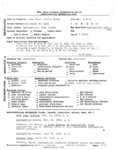
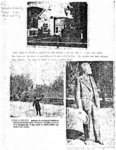
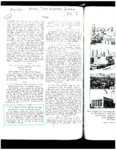
Show Historic Functions (enter categories from instructions) DOMESTIC I single dwelling Architectural Classification (enter categories from instructions) LATE VICTORIAN Other: Victorian Eclectic Other: Pyramidal Form Current Functions (enter categories from instructions) DOMESTIC I single dwelling Materials (enter categories from instructions) foundation _.:::..;St::,;;;o.:.;,:ne'--_ _ _ _ _ _ _ _ _ __ wa 11s _ _.......::;B:....;ri""'ck"--_ _ _ _ _ _ _ _ _ __ Adobe roof _ _ _S:::.:.h~in~gL..:.;le::.....__ _ _ _ _ _ _ _ __ Wood (trim) other DescrIbe present arid hIstorIc phYSIcal appearance. The Dallin House was constructed c. 1905 and is located beside Hobble Creek, a stream that flows from the nearby Wasatch Mountains and meanders through the original gridded town plat of Springville, Utah. The one-and-one-half story house is a Late Victorian Eclectic style brick house with a central pyramidal block with projecting bays. The house has a rounded side-passage entry and adjacent staircase, topped with a small conical roof or turret, the building's most significant exterior feature. 1 There is a one story rear lean-to addition built c. 1938 that extends across the entire rear elevation which replaces a small rear structure apparently removed when the larger addition was constructed. 2 This addition represents the only substantial alteration to the exterior. Some minor modifications have been made to the interior, but overall the house clearly retains its integrity. The house has a fieldstone foundation covered with a rock faced limestone ashlar. The wall system is a load bearing adobe brick (two wythes thick) with an exterior load bearing third wythe of common brick. The original front door and windows (predominantly one-over-one double-hung sash although the north elevation sash are two-over-two) are still in place. The roof has three Neoclassically trimmed gables. A tall painted wood frieze with dentils encircles the house, including the raking cornices and cornice returns. The c. 1938 addition has a concrete foundation with walls of common brick. There is a c. 1940-1950 frame two-car garage located northeast and adjacent to the house. It is considered a non-contributing building on the property. interior consists of a semi-enclosed formal entry hall with a open "L" configured staircase, the latter being the most significant historic interior feature with side panels, lathe turned spindles, a large banister and newel posts. To the left of the entry hall is a parlor including a corner fireplace. Leading directly from the entry hall is a large dining room with a bay window (extending out from a projecting gable). To the left of this room is what may have been the Th~ -1l- See continuation sheet 1 There is a slight stylistic gesture towards the then-outmoded Richardsonian Romanesque in this turretlike entryway. This is also suggested in the rock face brick used on the entryway wall and on the segmented lintels above the windows and doors. Neoclassical gable ends, and cornice and facia molding surround the upper exterior walls. This combination of Neoclassical and Richardsonian Romanesque references is typical of Utah's turn-of-the-century vernacular building con~entfons. 2 This is indicated by remnant paint and construction scars above the addition roof line. |