| OCR Text |
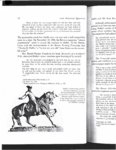
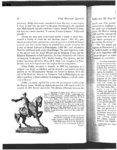
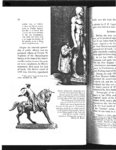
Show ftah Historical Quarterly Dallin and His Paul Revere Statue , but effective and enthustatues, but a work whose efforts to raise the money should fail. The remaining articles stipulated how the statue was to be protected against loss and where it was to be cast. Although not mentioned in the contract, Boston City had pledged $5,000 to the statue to make the contract more binding. The new contract brought unexpected opposition rather than fresh hope. Early accounts mention only that the Revere project failed because of lack of funds. Later sources, originating from DaHin's public testimony in the 1930s, revealed the antagonist who had destroyed public confidence in the Revere statue: Dallin's former teacher, Truman H. Bartlett, whose troublesome personality and opinion had considerable influence in the art circles of Boston. Bartlett's interference is best described by A.J. Philpott, a life-long friend of DaHin and art critic of the Boston Globe: eemed to be assured, :self in matters of business mittee, Mayor Augustus P. ng Mayor Hugh O'Brien, mtil July 4, 1885. 38 \rritings provide some clues statue was to be of bronze, edestal in Copley Square. :e the monument for which o to Paris to do it, although Id."9 ite for the statue and had ion of the monument with ~ would raise $20,000 more Ipreviously raised sufficient 6r the preliminary competiI defray DaHin's expenses in purpose of perfecting the ~nance were organized to nfortunately, the expected I ~e Revere statue was signed ~ntative 1884 contract was ~ifications were full of loopreedom: the Revere statue, ~bject to any modifications to receive $30,000 for the tlOt specified in this fee; the 'on; and the mayor and the 'rsonally responsible if their I :n Advertiser, December 19, 1884. /ling Transt:ript, January 22, 1885 ; 4. Dallin completed five commissions mer funds were still inadequate, and ~ n Evening Transcript, April 9, 1885, ¢cember 2, 1884; Dallin Biographical : 21 The first intimation young Dallin had that anything was amiss about the Paul Revere statue was when he thought he discovered a coolness and reserve in some members of the committee.... ... All he could learn was that doubts about young Dallin were being whispered around, doubts about the wisdom of awarding so important a commission to a comparatively unknown youth from the Far West. ... And then the real reason for all this whispering and hostility came to the surface in a sensational letter to the Boston Transcript-a letter about two columns in length-written by Freeman [Truman H.] Bartlett, a local sculptor who had not been in the competition. In this letter Bartlett severely criticised Cyrus E. DaIIin's model for the equestrian statue of Paul Revere and protested against the award of the commission to so youthful and inexperienced a sculptor. It was the sort of letter which sounds as if written with the best of intentions in the world and from the standpoint of protecting the public against .. a grave danger. It was well done, and it had its effect-especiaIIy on the committee. 'For without much of any excuse-and without any explanation to Mr. Dallin-that committee practically dropped the whole thing. 41 Although Bartlett's original denouncement of DaHin's "impossible man on an impossible horse" and the date of its issue in the Transcript have not been located, other writers verify Philpott's account. Bartlett's criticism had the desired effect. <2 Contributions were not forthcoming and the project was once again derailed. . Dailin, out of deference for Bartlett's reputation, did not publicly accuse his teacher of injustice until well after Bartlett's death in 1923. 43 " Philpott, "Dallin Has Waited 50 Years." .. ., "Report from New England Mission," Deseret News, December 14, 1940; Rabbette, Ashes of Famous Blaze." . ., Toward the end of his career Dallin was quoted as saying: "When the Paul Revere |