| OCR Text |
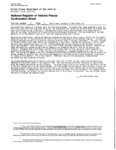
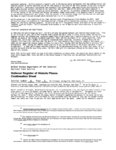
Show h Historical Quarterly Id the people than a It Taylor to his proposal businessman Hiram B. student at the Academy studio in October. Imwson encouraged Cyrus lis influence in securing : from Boston's Museum ~re model in an exhibit compared his statue to ) in the exhibit: ,vay stronger than the bronze figure of evolution," but doubtideal. Both horse and press the utmost speed t least the horse does lis work, and compare If Paul Revere . . . he veteran in one respect ect whirlwind of speed l does not detract from piece of work for so ar it may be too good, the future. 2<1 ~all's :en moved to more posi:ritic's closing statement ion. They, likewise, had , out such an important . experienced all of the ack of funds, and indeci::>rs avoided. vere committee. Finding :urned to the West. On resident John Taylor: 'ivision, Historical Department, 13. Dallin and His Paul Revere Statue 17 The Committee of the Revere statue have decided not to do anything at present; so I cannot tell how long I shall have to wait before a decision. In the mean time, I have to live, and as everything is so dull here I am going to try what I can do in my native Territory. If you have anything in the line of sculpture you would like done, or if you know of anyone I should be most pleased to hear from you on my arrival in S.L.C.28 Having received the last of the $300 prize money for the initial Revere competition, and with funds donated by friends, Cyrus was able to return to Utah in February 1884. He had been led to believe that he would be able to make statues of Brigham Young, Joseph Smith, or other prominent men. The Boston Transcript reported that he would open a studio in Salt Lake City "with the intention to study the picturesque subjects of his native Territory, such as Indians, cowboys, buffaloes, etc., with reference to making statuettes and groups illustrating real American life." If in his optimism, Cyrus had hoped to secure profitable commissions from Mormon church leaders and public officials that could finance the pursuit of these more "picturesque subjects," the dream did not materialize. Cyrus was welcomed home with all the fanfare of a hero, and Hiram B. Clawson, as promised, introduced him to influential Mormon leaders, but these contacts produced no commissions for work. 29 THE THIRD MODEL-DALLIN'S FAVORITE In mid-June Cyrus was notified that the Revere committee was ready to negotiate with him, providing he would make certain alterations in his model. On hearing this encouraging news, Dallin immediately returned to Boston where he secured a small studio in the Lawrence Building and began a new Revere model that he finished in August. The new model was studied by the committee who found it unsatisfactory. Additional alterations were suggested that resulted in still another model that Dallin completed and sent to the Boston Art Club on November 11, 1884. In the days that followed, the committee met and discussed the merits of the model and then adjourned to Dallin's studio.ao The details of Dallin's meeting with the committee members are revealing: .. Dallin to Taylor, January 13, 1884, LDS Archives. . . "" Dallin Biographical Manuscript, pp. 9-10 ; "Art and Artists," Boston Evening Transcnpt, February 4, 1884. Dallin never did make statues of Joseph and Hyrum Smith for the temple. However he did make a plaster model lor the Angel Moroni statue in 1891 and a plaster bust. of Joseph 'F. Smith, the only statuettes that remain in the Salt Lake Temple, according to Linden W. Millgate, chief engineer, who was interviewed by the author on November 11 and 14, 1974, in Salt Lake City. OIl "A Laurel Wreath for Utah's Sculptor," Salt Lake Herald, June 22, 1884; "Revere Statue," Salt Lake Herald, November 30, 1884; Dallin Biographical Manusrript, p. 13. |