| OCR Text |
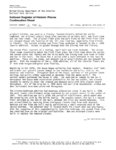
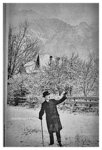
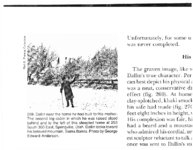
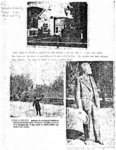
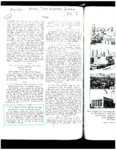
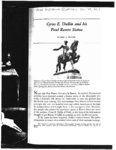
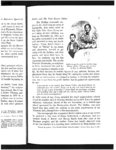
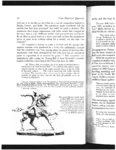
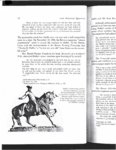
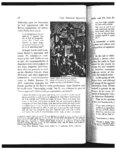
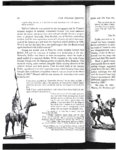
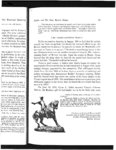
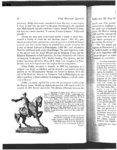
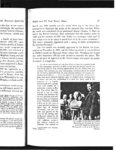
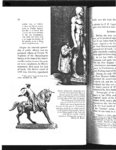
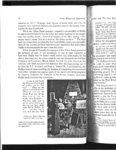
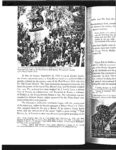
Show lh Historical Quarterl)' Dallin and His Paul Revere Statue f competition limited to :ain considered "all the It reach a decision. The artists that dragged on resented and considered. : to have the commission Ddel, but this idea was Thomas Ball had made his Paul Revere statue in the previous year, 1882, according to his autobiography, My Threescore Years and Ten. 20 Ball's interest in the Revere competition is also mentioned by Glad MacIntyre, who interviewed Dallin in 1940: Dn and the group's subho additionally charged . means of opening comwere not so reduced in " 19 The committee was lter his model, a surmis.e June 23, 1883: :lio on Bedford Street a ed work, and is in many shown at the Art Club Ig and unlike anything and a decision will not wiII probably return to 'ston Evening TUlnscript , January Ike Tribune , December 23 , 189-l : ;culptors such as Augustus Sainthed by the vacillating committee. Ize second Revere model, made :n May 1883, was not accepted 'y the indecisive committee, an indication of the inaction and vacillation that was to stretch over more than a half-centur),. This model's present location mknown. Photograph courtes), of the Robbins Librar),. 15 Then there arrived from Italy Mr. Thomas Ball, whose statue of George Washington stands in the Public Gardens. Mr. Ball had hoped to submit a model in the Paul Revere competition and was disappointed to find himself too late. Whereupon the committee, having regard to Mr. Ball's undoubted ability, held a second competition, including Mr. Ball's model as well as those of Mr. DaIIin, Mr. French, and Mr. Kelly.21 Newspapennan Thomas Carens verified the above account and asserted that the three winners of the "elimination contest" had no objection to Ball's entry into competition. While he awaited some word from the committee, Dallin completed a number of smaller works, including Little Boy, exhibited at the Museum of Fine Arts in October 1883; Cowboy, Indian Chief, and Greaser, three equestrian statues; and a bust of Oliver Wendell Holmes. During the summer of 1883 Cyrus gave up his Pemberton Square studio and began traveling, sketching, and reading. Upon his return to Boston he rented space at the Studio Building at Tremont and Bromfield streets.22 In August, Dallin's second model of the Revere equestrian was placed on exhibit at Chase's gallery where it was favorably received: This new model presents Revere on his horse with a very spirited, unconventional and vividly dramatic pose and gesture. Reining back his excited steed, the "midnight messenger" points with a right straight arm in the direction he has come, and his tense and anxious face almost speaks the message he bears for each farmhouse by the way. The action and "story" of the statue are powerfully given, and the whole strikes the eye as singularly fresh, earnest and original. 23 This encouraging appraisal of his work surely reinforced DaHin's confidence, for in September the sculptor wrote to LDS President John Taylor, calling attention to his success in Boston and proposing that he be commissioned to erect a memorial statue to Joseph Smith: . Knowing the reverence with which Joseph Smith's memory is held in Utah, and also knowing the generosity of the people, 1 know of nothing "" 2d ed. (Boston, 1892), p. 310. "Story of a Statue," 1940, clipping in Dallin Scrapbook. .. Dallin Biographical Manuscript, p. 8 ; "A Skillful Sculptor," Deseret E vening News , February 1, 1884. " "Art and Artists," Boston Evening Transcript, August 25,1883. 11 |