| OCR Text |
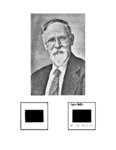
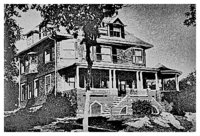
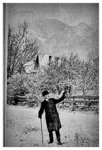
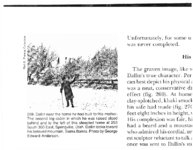
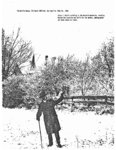
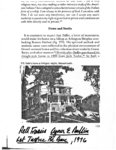
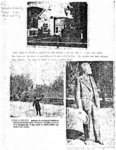
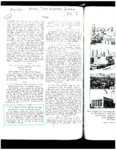
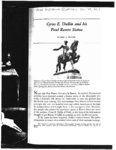
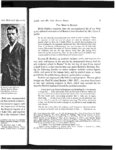
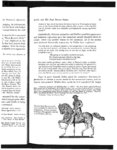
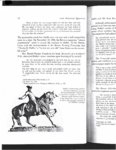
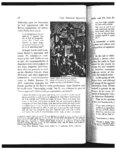
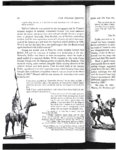
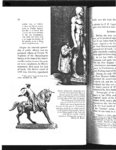
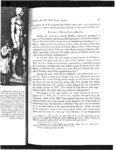
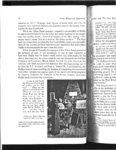
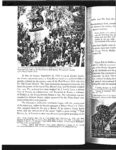
Show ltah Historical Quarterly Dallin and His Paul Revere Statue 23 that they might consider it, or better still you might make other studies of the man until satisfied. You seem so just in your appreciation of situations that I am sure you wiIl understand my position, particularly when you consider that what I have stated about your work is exactly what I think and it would not be fair to the gentlemen you mention, the public, or myself, should I commit myself to approve of a part of your work that does not satisfy me:i5 It is reasonable to believe that Dallin accepted the advice of SaintGaudens and others and worked on the figure of Revere to make the changes that are apparent in his future models. STUDY IN PARIS eft by clock, and his mts in Paris. Photoof the Robbins Library. lent. Saint-Gaudens said was reluctant to give an r on himself : rtainly if carried out as he rider I must frankly , There is so much that 1 have a good sculptor's worry you might make that as the matter is so It up the work full size )DIy until that is done ke so small an outlay a.ul ~nteied a model, too. I won (n't get along very well with me :us E. Dallin," August 18, 1940, ': A Collection of Photographs Ada M. Barron and Beulah C. pescript, Dallin Collection. In the fall of 1888 DaHin's fortune changed when Mrs. David P. Kimball, a distant relative of his fiancee, Vittoria Murray, gave him money for study in Paris. Before leaving for Paris in August 1888, he signed for the second time an extension clause in the Revere contract, setting the new completion date to September 1, 1891. Like many of his American contemporaries who traveled to Paris, the undisputed sculpture center of the world, DaHin entered the Academie Julian where he studied under the noted sculptor, Henri Michel Chapu.46 In the spring of 1889 Dallin applied for entrance into the Ecole des Beaux-Arts, and although he passed the examination, he did not take advantage of the opportunity inasmuch as he had secured an important commission from Thomas W. Evans, an American dentist. Dr. Evans wanted to present an equestrian statue of the Marquis de Lafayette to France, in the name of the American people. DaHin made the bronze model of Lafayette that was prominently displayed near the entrance of the American Industrial Department at the Paris Exposition of 1889. Prior to the opening of the exposition. Dallin wrote to his brotherin-law, Sid Southworth, explaining his recent work: I have been working very hard for the past months .... I have a pronze model of an equestrian statue at the exposition which lam to put up In the city of Paris. The subject is Lafayette, and is given to Paris by a rich American who lives here, and he has commissioned me to do the work, so you will see that in one sense all goes weIl with me. This wiIl be quite Art. .. Saint-Gaudens to Dallin, January 12, 1887, microfilm, roll 141, Archives of American "Vittoria C. Dallin, "The Family of Cyrus E. Dallin and V. C. Dallin and Facts about Them," p. 7, notebook in the possession of Lawrence DalIin; Craven, Sculpture in America, p. 419; Downes, "Cyrus E. DalIin, Sculptor," pp. 9-10. |