| OCR Text |
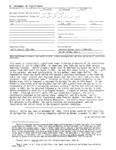
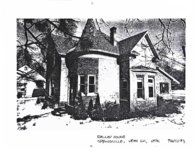
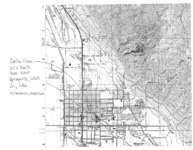
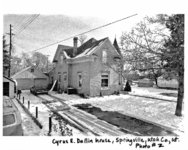
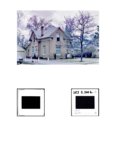
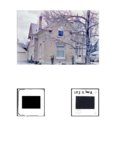
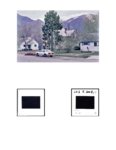
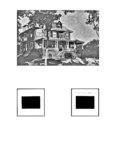
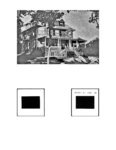
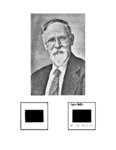
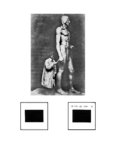
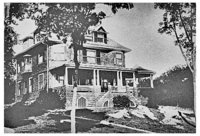
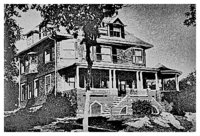
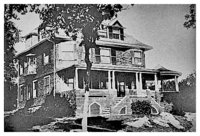
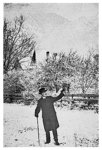
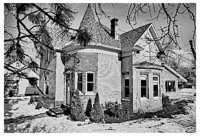
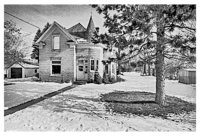
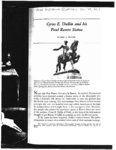
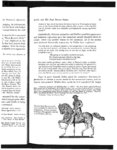
Show NPS Form 1C).eoo-. (8-88) Utah WordPerfect Formal OMS No. 1024-0018 Un;ted States Department of the Inter;or National Park Service National Register of Historic Places Continuation Sheet Section number 8 Page 2 Dallin House, Springville, Utah County, UT associated with Dallin's life and work in the western United States. Dallin had lived and worked temporarily in his native state, but this structure is ~he only building still standing that is directly associated with Dallin in Utah. Cyrus E. Dallin was born on November 22, 1861, fifty miles south or Salt Lake City, in Springville, Utah which was settled by Mormon pioneers in 1850. His first recollections were of inside a fort built by early citizens for protection against hostile Ute Indians. Both of Dallin's parents were Mormon converts and emigrants although Dallin's family eventually, while in the boy's youth, abandoned the Mormon faith and joined the Presbyterian church in the same community. Cyrus was the second of nine children and the oldest living son of Thomas and Jane Hamer Dallin. Dallin was scarcely educated in a local Mormon school and latter received more careful training at a mission school sponsored by the Presbyterians. Encouraged by his mother's kindergarten-like training and with the support of his father, Dallin began drawing and making small sculptured figures of "toys, indians, and playmates," from clay found in exposed stream beds. At the age of twelve, his skills were publicly noted and displayed with those of a older local amateur artist. As a teenage miner working with his father, Dallin's talents were noticed by a local businessmen and mining company owner, the latter being a Bostonian. Between these two men and another wealthy mining official in Salt Lake City who acted as patrons, Dallin was sent to sculpture school in Boston. In 1880 at the age of 19, Dallin attended the sculpture school of Truman H. Bartlett, a noted art academic and critic. Dallin's education would be sporadic, due to lack of funds and because profitable work offered to him would take precedent over formal training. His unceasing studio work and personal junkets throughout the Boston area also served him an education. In the late 1880s Dallin lived in Paris, where he attended the Academie Julian. In 1889 he was accep!ed at the Ecole de Beaux Arts but chose to pursue a lucrative commission instead. In 1883 Dallin entered an anonymous competition for an equestrian statue of Boston's own Paul Revere, to be inspired by Henry Longfellow's famous poem "Paul Revere's Ride." Eventually, Dallin won the competition although his youthfulness, western references, and unknown reputation, and later the lack of donated funds for the ~ See continuation sheet e Dallin worked and lived in Salt lake City, Utah during the mid 1880s and early 1990s. The two known sites associated with the artist, the Gardo House (on the corner of State and South Temple Streets) and a business block on the corner of West Temple and 300 South (both studios) are no longer standing. Francis, 17, 67 and 157. 7 Deon C. Greer, et al, Atlas of Utah (Provo, Utah: Weber State University and Brigham Young University Press, 1981) 91. 8 Francis, CyrUS E. Dallin 1-30. |