| OCR Text |
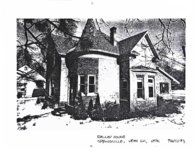
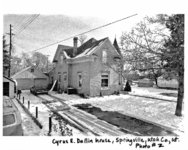
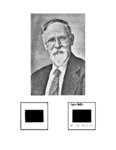
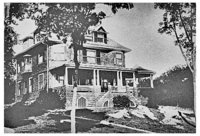
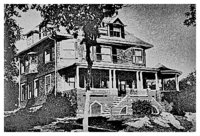
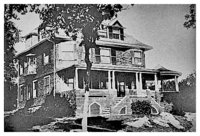
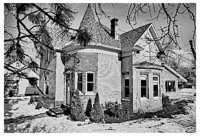
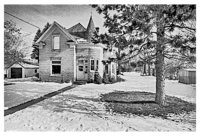
Show OMS No. 1024-0018 NPS Form 10-900-a (&-86) utah WordPerfect Format United States Department of the Interior National Park Service National Register of Historic Places Continuation Sheet Section number ~ Page __3__ Oallin House, Springville, Utah County, UT American's foremost sculptors and art academicians. lO He won numerous prizes and awards and executed scores of notable sculptured works, most all of those installed being located in the eastern United States. Dallin worked in the tradition of his older and more noted friend Augustus SaintGaudens (d.1907). Both followed the Beaux-Art tradition of "idealized realism" although Dallin rejected the customary lure of classical themes for distinctly American subjects. Dallin's art was still inescapably French, with most of his art posed in a "somewhat classical style." Dallin succeedrd Saint-Gaudens as one of America's most noted adherents of Beaux-Art sculpture. 1 Dallin's career matches chronologically that of Frederic Remington (1861-1909), although Remington died in middle age. Where Remington celebrated the American cowboy, Dallin celebrated and venerated the American Indian. Dallin has been characterized as a master of the Western genre and is most noted for his works depicting the demise or decline of the "noble indian." Although equestrian and Indian subjects were his primary interest, and what he is most noted for, his life's work involved the full breadth of sculptural subjects. Dallin's generally romantic work in the Western genre corresponds with the anthropological and romantic studies of Native Americans during the late decade of the 19th and the first decades of the 20th centuries. Many of Dallin's Indian works have became near household-like iconography, some enduring and proliferating to the point where original artistic attribution has long since been lost. Many of his works are deeply embedded in America's collective memory regarding Native Americans. For Dallin, his artistic production found inspiration in the Ute Indians of his childhood and through the western themes experienced in his mountain home of Springville. As one national biographical work stated, "from the grandeur of the mountain scenes [Dallin] absorbed and develpped the ideas of simplicity and strength which characterized his art in sculpture." Historical Background and Significance By 1905 when the Dallin House was built, Cyrus Dallints art work had gained national and international recognition. Prior to 1905, Dallin had returned from a second period of study and work in Paris, France (1899) and had won numerous national and international sculpture competitions -- a gold medal and an honorable mention at the ~ See continuation sheet 'OSwanson, 85. "Some noteworthy examples of works executed include Massasoit (1911, Pilgrim Hall Museum, Plymouth, this heroic size Indian figure overlooks historic Plymouth Bay), General Winfield S. Hancock (1913, Gettysburg, Pa." Anne Hutchinson (1915, Boston Statehouse) and Chief Joseph (1926, New York Historical Society). Frances, ~ E. Oallin, 241-245 and Swanson, 10, 102 and 185 . '2National C~clopedia of American Biography (Ann Arbor Michigan, University Microfilms, 1967) v. 14:478-79. One example of t e pervasive popularity of Oa lin's imagery is Appeal to the Great Spirit. Some of Oallin's other "ennobling and classical realist depictions of the American indian" include Signal of Peace, Medicine Man, and Scout." Swanson, 85. |