| OCR Text |
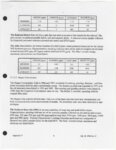
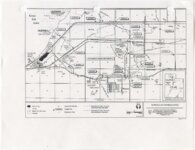
Show down between 1985 and 1987. In mid 1989, the neutralization process was changed by reducing the pH from 12 to 10 to provide better control of the pH of the final effluent at the discharge location. The addition of ferric chloride resumed in August 1991 to reduce the concentration of arsenic in the · effluent and to reduce the leachability of arsenic from the sludge. Most of this low-lime sludge was stored in Pond D, but some ferric chloride-treated, low-lime sludge was placed in Ponds B and C. The WWTP treated approximately 3000 gallons per minute (gpm) of which approximately 1250 gpm came from the Smelter, 1300 gpm from the Power Plant, 300 gpm from the Refinery, and _150 gpm from the North Concentrator. The WWTP clarified effluent stream was approximately 4000 gpm due to the addition of lime slurry and water as part of the neutralization process. The treated effluent produced a sludge residue at a rate of approximately 250 wet tons per day. Due to modernization of the Smelter and Refinery, the WWTP will no longer be needed (as of this writing, the flows have been significantly reduced or stopped from all sources). The Plant may remain operational for treatment of decontamination waters generated from soil removal and demolition activities. • A summary of results from previous sludge characterization studies (Phase I) and a discussion of Kennecott's most recent (Phase II) sampling investigation have been submitted to the agencies as the Wastewater Treatment Plant Site Characterization and Sludge Stabilization Study, Kennecott Plant Projects Group, November, 1994. The Phase II investigation was conducted on the WWTP sludge to verify Phase I data, fill gaps in the previously obtained data, and insure proper QA/QC measures. Data were collected on physical and chemical properties of the sludge in the ponds, native soils underlying each pond, and dike material surrounding each pond. Characterization activities were implemented to assess acctimulated sludge for design and evaluation of potential remedial actions. The WWTP area (Dwg. No. 503-T-0173) consists of two overall soil sites. To date only one site has been characterized and demonstrated elevated concentrations of metals. The Wastewater Treatment Plant Ponds Site (WOl which includes pond A, B, C, C-extension and D) is a series of five ponds that received sludge from the WWTP. The sludge has been characterized and will be mixed with north facility soils and disposed of in the Arthur Step-Back Repository. Ponds C, C-Ext and D have been designated CAMUs. These ponds will be used to temporarily store soils removed from soil sites. The sludges have a very low in place permeability, thus reducing the possibility of releases to the atmosphere or ground water. The ponds will be closed to the criteria outlined in Section 4.2. Further characterization of the ponds footprint will follow the removal of the sludge. The Wastewater Treatment Plant Soils Site (W02) is the footprint soils of the WWTP facility. This facility is operational and once it is determined by Kennecott that the WWTP is of no further use it will be demolished. Characterization sampling will follow the demolition of the facility. Appendix C* 15 July 18, 1996 Rev. C |