| OCR Text |
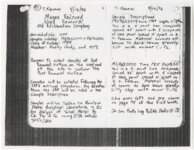
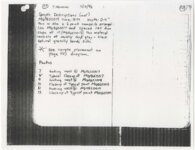
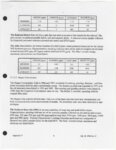
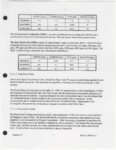
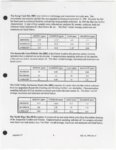
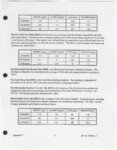
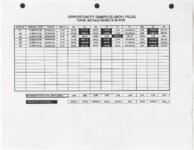
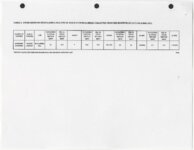
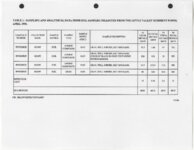
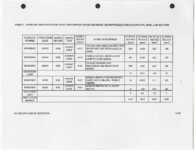
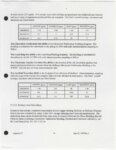
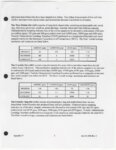
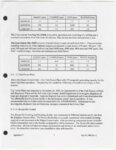
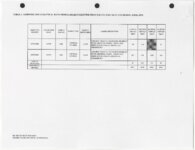
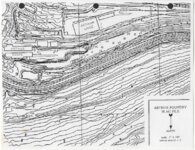
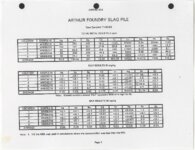
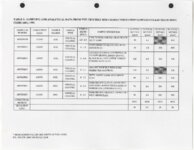
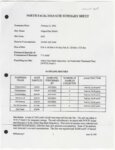
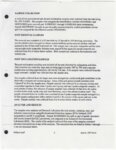
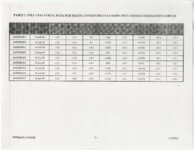
Show the west end covering an area of 21,000 square feet. Removal was restricted in both areas due to an underground water pipeline, the Ore Haulage rail tracks and the Magna Rail Car Shop building and as a result, some contaminated soil was left in place. Removal depths varied from I to 5 feet at the west area and 1 to 4 feet in the east area and totaled 3500 cubic yards. After removal, 30,000 cubic yards of fill soil were hauled to the Site to provide enough material to reduce the slope and construct two terraced benches that extend through the Site from east to west to aid in controlling erosion. Contaminated soil was left in place at the west area immediately below the Ore Haulage rail tracks where further removal would have compromised the integrity of the tracks, and on the north side of the Rail Car Shop Building, an active facility. SAMPLE COLLECT ION A total of 17 post removal and 13 post reclamation and fill samples were collected from the Site (Dwg. No. 507-T-0183-Post Removal and 507-T-0186-Post Reclamation). The samples were assigned the identification numbers MG95X0003 through MG95X0019 (post removal), MG96R0007 through MG96R0013 (post reclamation) and MG96F0001 through MG96F0006 (fill soil). Samples MG96X0005 and MG96X0014 were split as part of quality assurance and quality control (QA/QC) procedures and were assigned the identification numbers MG96S0002 and MG96S0003. All samples were composites consisting of three to six subsites arranged in a linear manner trending east to west. Subsites were spaced between 25 and 50 feet apart and sample material was collected from between 4 to 6 inches below the surface. Post reclamation samples were collected from stockpiled fill soil prior to and then after placement and regrading. Sample sites were surveyed using the Global Positioning System. ANALYSI S AND RES UL TS The samples were analyzed at either Chemtech Analytical, Mountain States Analytical or Kennecott Environmental Laboratories (KEL). All samples were analyzed for total arsenic. cadmium~ lead and selenium concentrations using the Environmental Protection Agency (EPA) Methods 3050 (preparation) and 6010 (analyiical). The post removal samples were analyzed for leachability using the SPLP for arsenic, barium, cadmium, chromium, lead, silver and selenium concentrations. Samples MG96X0005 and ~1G96X00 14 were split as part of QA/QC procedures and were analyzed at KEL. The results of the analysis are listed in Tables 1 through 4 and are discussed below. TOTAL METALS A~ALYTI CAL RESULTS . A total of 17 post removal samples were collected froi:n the Site. Seven of these samples exceeded the action levels for lead and( or) arsenic of 2000 and 200 parts per million (ppm) respectively. T\rn of the seven samples contained only lead above the action level, the remaining fiye had both arsenic and lead above the action levels. In the five samples exceeding MO I prpt. wpd "' 2 June I 0, 1997 Rev. 0 |