| OCR Text |
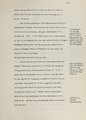
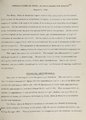
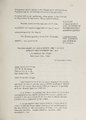
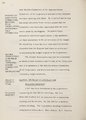
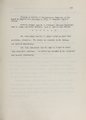
Show '7- 367 $152 for 1947. " Thus, the report points out that the immediate result of increased enrollment was a m per-student cost. Obviously, until the staff could be increased to accommodate the new greater enrollment, the expenditures existing at the time, spread among a greater number of students, resulted in a lower student cost in 1947 than existed in 1940. "Not until fiscal year 1949 did the university improve in its expenditure-per-student position. " (Booz, Allen & Hamilton report, page 44.) In contrast to this, the situation in 1952-53 is one in which the cost of an enlarged staff is spread over a decreased enrollment thus making the present per-student expenditure high. Another very important element which contributes to this "lag" effect is the fact that the expanded enrollment immediately following the war consisted al- most entirely of students in the freshman and sophomore classes. the least expensiveclasses to teach. These are They are large and their teachers are usually in the lower salary ranks --= graduate teaching assistants, instructors, and assistant professors. In the same manner, the "lag" effect during the period of decreasing student body means that the residual of the inflated enrollment is in the upper division and graduate classes. classes. These are the most expensive They are small and are taught by the highest salaried faculty members. One should also keep in mind that reduction of the student body by a relatively small figure (say 500) in any one year does not permit the elimination of classes. There are roughly 1500 classes. Students normally average 3 classes each. V Hence, if there are 500 fewer students spread throughout 1500 classes, the result is one less student per class. Certainly, this does not present much oppor- tunity for reduction. To summarize, the staff simply cannot be reduced at the same rate as enrollment. This is particularly true when the picture is complicated by the complex- ities of graduate work, accreditation in new areas, and the course requirements resulting from the up-grading which has taken place since World War II. l C. Still another factor which tends to confuse the picture is the variation in the state |