| OCR Text |
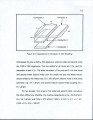
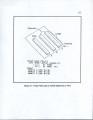
Show 90 account, but it did not take into account any variation of path widths. The results from it, therefore, were between the other two. Limitations of the ACRE Implementation Because all computations in ACRE are done in virtual memory, there is the fundamental limitation of physical memory and swap space, and a performance penalty is incurred when too much disk swapping occurs. ACRE has a number of memory managers internally, essentially one to each-feature, so that when there is swapping, there is some benefit from the locality of reference that occurs when sequencing through sorted data. The implementation also suffers from the lack of garbage collection, but that was omitted due to the implementation schedule and it is not difficult to do. Full Boolean operations between layers were first envisioned as necessary, and then trimmed as development proceeded, because they could be done in a preprocessing step. Boolean operations among layers are necessary to determine what substrate is under paths, especially when the substrate affects the coupling capacitance, but they can be done in a preprocessing step outside of ACRE. Perhaps the most severe limitation in the program is the requirement that all analysis operations be fundamentally pair-wise operations, meaning that if interactions involve more than two geometries, they have to be factored into a sequence of operations that can be performed in a pair-wise fashion. This is evident when examining a series of parallel paths, as in a bus structure, on a chip. The runs can be measured for their separation, but knowing that there are |