| OCR Text |
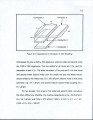
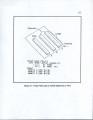
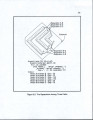
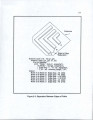
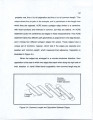
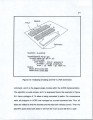
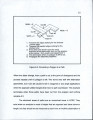
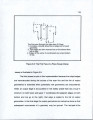
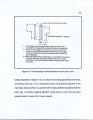
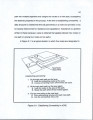
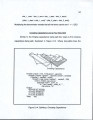
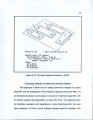
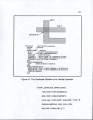
Show 82 In the Checkmate approach a Boolean operation needs to be performed that generates an overlap 'and' region that is measured for area, and •n ACRE this area is directly computed from the multiplication of two path widths. This takes· significantly less computation to yield the same result. This could be generalized for paths that do not lie on Manhattan boundaries because the area of an intersection is really the product of their two widths divided by the sine of their intersecting angle. The Checkmate Approach to Fringing The fringing example is more complicated but comparable to the overlap example above. In order to deal with fringing capacitance, Checkmate has the problem of first building a device and measuring it, that device being a capacitor with a node on each trace that has some coupling. This capacitor is formed from two traces by applying an oversize step by some amount, a Boolean merge ('oring' the layers), and an undersize step by the same amount. The resultant geometry is tagged a capacitor with nodes assigned to the two traces. This capacitor is measured for its area, and the fringing capacitance is inferred from that. That this is inaccurate is an understatement, but it does provide a baseline, however, to compare results from ACRE. The difficult part of determining fringing capacitance between two paths in proximity is the part of measuring the separation between the two paths where the Checkmate program does not have an inherent facility for measuring separation. This is achievable indirectly because Checkmate does have a facility for measuring the perimeter of an |