| OCR Text |
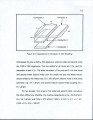
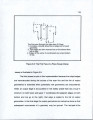
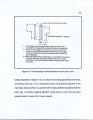
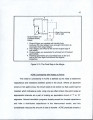
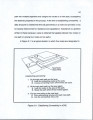
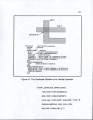
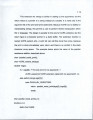
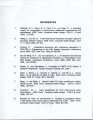
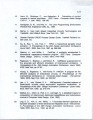
Show 51 program can provide enough measurements to determine the coupling capacitance by several means, and that capacitance can be split with the same 'foreach' iterator as illustrated above. In this example the statement reads, "Foreach layer 110 pair, for each centerline segment pair, if they cross, foreach node pair print the capacitance between them." Resistance Extraction in ACRE Some work to generate an estimation of resistance by dividing a path into known portions such as bends and trapezoids was published by Mark Horowitz and Robert Dutton.23 A three-dimensional approach was published with a finite element method calculus solution by Takashi Mitsuhashi and Kenji Yoshida.24 The algoriithm for a program named REDS, tailored to fast extraction of digital circuit interconnect, was published by Don Stark and Mark Horowitz.25 The most promising approach to forming a mesh with a reduced number of segments was published by Albertus Kemp et al.26 Finite mesh methods provide a more accurate analysis of threedimensional features, but the results of a more accurate analysis can be cached in ACRE because most IC designs and all of the ones for which ACRE is designed employ a high degree of regularity. ACRE originally had a finite mesh analysis portion in it, but it was terribly inconsistent with the rest of ACRE designed for performance. It consisted of solving resistance using delta to Y and Y to delta conversions, summing resistances when they became parallel or serial, and employing a complex pattern recognition unit to direct the work of |