| OCR Text |
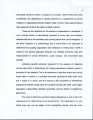
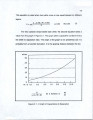
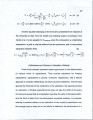
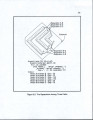
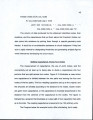
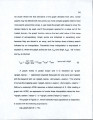
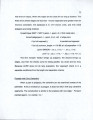
Show 20 w ( 21t w 2 t J C = E-+E --+--ln(1 +-) h I n ( -Bh+ w-) h 1t- a h w 4h W< 2h (4) w~2h (5) Another equation belonging to the third set is presented from research at the University of Utah, from the ACME wire modeling system of professor Tony Carteret al. It is an equation for Ccrossover when the intersection is a Manhattan intersection. w0 and w1 are the widths of the two conductors, and his the vertical separation between them. (6) Deficiencies and Choices in Calculation Methods These three samples represent typical approaches to the determination of various kinds of capacitance. They provide equations for fringing capacitance, capacitance to ground, crossover capacitance, and a tabular approach to complex relationships, but each has some deficiency. The first case ignores the thickness of the conductors in the estimation, the second provides an estimation of fringing capacitance but does not take the width of the paths into account (except that all computation was done for paths of the same width), and the third is taken from two-dimensional numerical analysis. An engineer seeking a practical solution to the estimation of the coupling capacitance may find enough here to direct his or her efforts to determine the performance of a ! |