| OCR Text |
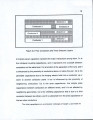
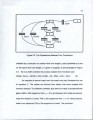
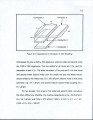
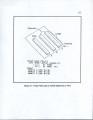
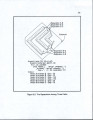
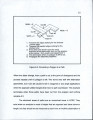
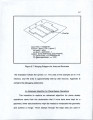
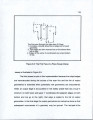
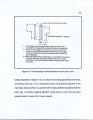
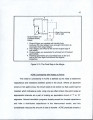
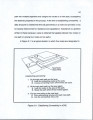
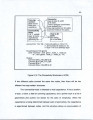
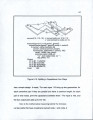
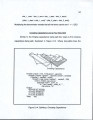
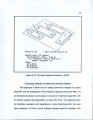
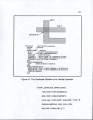
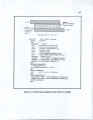
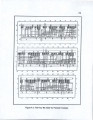
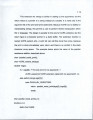
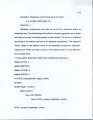
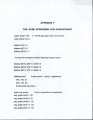
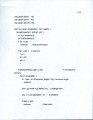
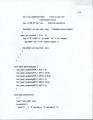
Show 43 a circuit and at the abutment of 'E' and 'A' - '0' is a point for a new node 'X'. ACRE acts on these paths to find the new node and identify it with, a name composed of the mnemonic for the layer and the coordinates in data base units. When extracting a circuit, these new names have the same presence in the string to id table as the old names, and all other behavior is the same. A path can be queried for what its connections are, and a node can be queried for what paths connect to it. The usage model for ACRE assumes that the critical paths will be designated with point nodes, and that the reporting will have an extraction that limits (or condenses) the interactions to what is attached to the critical paths. When this is coupled with an ability to convert polygons to paths and the ability to identify point nodes as imported text, it becomes a versatile and powerful facility. A 'connect' statement in ACRE is illustrated in Figure 3.12. It has a single statement to associate paths and point nodes on the same layer (1 0) and generated connected paths on an arbitrary layer 11 0. The structure is more complex than the simple statement might imply. It has four main structures interacting to provide a way of storing and iterating through the connections. The 'two-cap-resistor' structure is designed to hold an association between two nodes at either end of a resistance, and it points to the nodes where the capacitance resides. The value held in this structure is the resistance between the two nodes. Between any two connected nodes, there will be one of these structures. The fields 'start' and 'end' indicate the two arbitrary designations for the connections, and they each point to a 'connectivity-node'. |