| OCR Text |
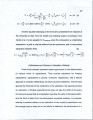
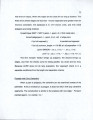
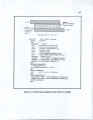
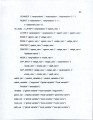
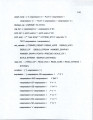
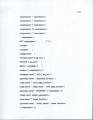
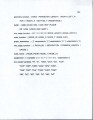
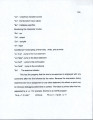
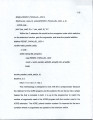
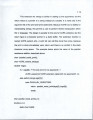
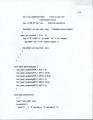
Show 64 evaluates that many of the argument expressions. 2. The results, which are the keys, are used to find that entry in the database. If no entry exists, one is created with all data fields set to zero. The values for the rest of the data fields are mapped into variables with the same names as used in the database. 3. The rest of the expressions in the access statement are evaluated. The evaluations were deferred to this point so that the variables within them could be set from the database record. These expressions may include function calls to achieve complex actions. 4. The results of the expressions are put back into the data base in an order specific mapping. 5. The new values are assigned to the variables, and they become available for access in subsequent statements. Here is an example of an ACRE statement that performs the analysis described in the iteration above. It involves three function calls embedded in the statement to update conditionally the location of the maximum capacitive coupling. If ACRE had the ternary operator '?:' from C, then these function calls would not be necessary. cap_dbase . add ( name1 , II the id to text string for node 1 name2 , II node 2 capacitance+ new_cap, II accumulate capacitance count_of_occurrences + 1 , II increment the count find_max ( max_occurrence , new_cap ) , |