| OCR Text |
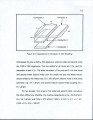
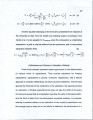
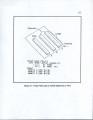
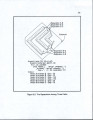
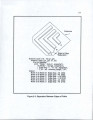
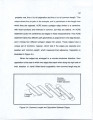
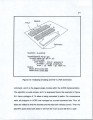
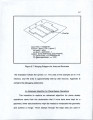
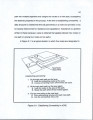
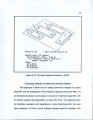
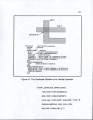
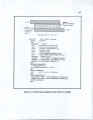
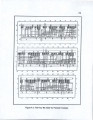
Show 21 digital circuit, but the trade-offs between the use of computation resources and the final accuracy may be made in the equations chosen as well as t~e ACRE implementation of those equations. A three-dimensional numerical method that covers surface charge is available1s to address these issues, and it divides surfaces into panes that are solved for their interactions. It provides an acceleration in the computation times over direct numerical methods of as much as 100 times. When two 5-bit wide busses cross at right angles the computation time is over 12 hours on an RS6000 computer for direct computation, accelerated to 13 minutes through a technique called the multipole generalized conjugate residual method. For the crossing of two 6-bit wide busses, the time required is over 36 hours for direct computation, and it is reduced to 24 minutes through MGCR. An engineer wishing to analyze a circuit might employ this technique to generate sample cases that are referenced in a circuit wide extraction. Accelerated Simulation Using AWE The use of a new simulation technique known as Asymptotic Waveform Evaluation (AWE) researched at Carnegie Mellon University1s provides for the application of a Pade' approximation technique to circuit simulation problems.17 This accelerates the simulation of circuits by providing a transform between the time and frequency domain of a circuit with a Laplace transform, which has a constant cost at each time point. Because it has been extended to include lossy lines and other circuit devices and fitted into a SPICE-like environment |