| OCR Text |
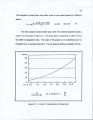
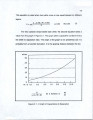
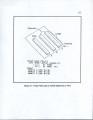
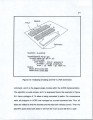
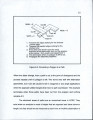
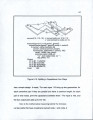
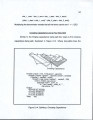
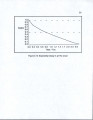
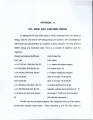
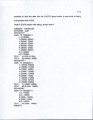
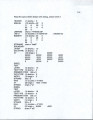
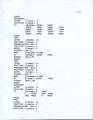
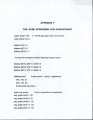
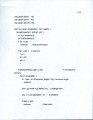
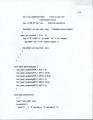
Show 59 Interpolation Tables in ACRE A table or graph in ACRE provides an acceleration to computing functions when those functions can be expressed as two-dimensional or threedimensional plots. An example of this might be where coupling capacitance between two paths is computed as a function of the separation of those paths. This would be a two-dimensional plot where coupling per unit length is on the Y axis and separation between the paths is on the X axis. If other values are held constant, such as path width, path height, shielding below, shielding above, and path layer, then a function of one input can be assumed. To make a threedimensional plot one other variable can be introduced, and that variable may have either quantum values (i.e., discrete levels) or continuous values. If the other variable has quantum values, then the result is a tam ily of twodimensional plots, and if the other variable can be continuous, then the result is a three-dimensional plot. This facility is suitable for mapping a family of curves as often appears in the analysis of integrated circuit devices with a subscript for indexing into which curve. Any number of these tables with any number of points can be used in ACRE. A graph provides piece-wise linear interpolation as an acceleration to computing a function. In use two paths might be measured for separation and common length, where the separation is passed to a graph function and the capacitive coupling per unit length is returned. The coupling is multiplied by the common length to determine capacitance. The accuracy of a curve is determined by the number of points used in its definition, and the points need to |