| OCR Text |
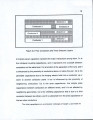
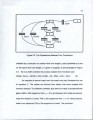
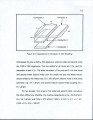
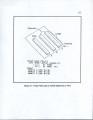
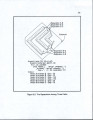
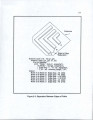
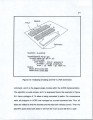
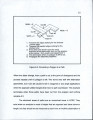
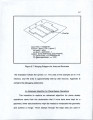
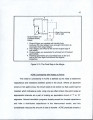
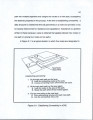
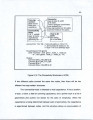
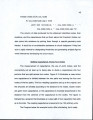
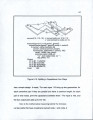
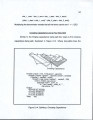
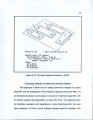
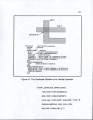
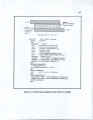
Show 30 twice, and brings two different path geometries into scope. Then the inner iterator takes two more arguments: the two different paths as geometries, and brings two centerline segments into scope. The two centerline segments have a unique set of functions: 'parallel' tells if they are parallel and 'separation' measures the closest point between them. When it is a centerline being measured, then it is a centerline-to-centerline distance. A parasitic analysis on a set of paths does not need to use the centerline-to-centerline distance because the edge analysis is also available in a similar form. Separation Between Edges of Paths With every geometry is kept a more full set of data than simply centerline coordinates, and this illustrates that the edge coordinates are also generated and kept implicitly. When ACRE observes that they are needed and not available, it generates them on demand and saves them with the centerline data. The transformation from centerline to boundary of a path is trivial and may therefore be done implicitly, but the transformation from a boundary to a path may result in a number of paths: that is not trivial and therefore must be explicitly requested of ACRE. Figure 3.3 illustrates an analogous situation to Figure 3.2 where an edge is used instead of a centerline, and it also introduces common length as a function of two edges. This statement to analyze edges reads: "Foreach layer 10 pair with geometries g1 and g2, foreach edge pair with edges e~ and e2, if e1 and e2 are opposed, then print the text of g1 property one, the text of g2 |