| OCR Text |
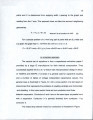
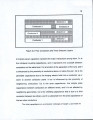
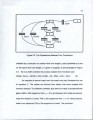
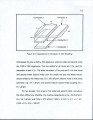
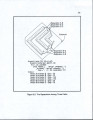
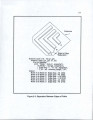
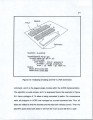
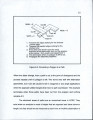
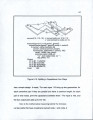
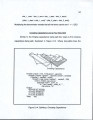
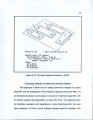
Show 4 manner, and the model for nodes needs to provide a way to break them up. A number of authors have provided guide lines for dividing a straight path into several shorter segments that behave as resistive, capacitive and inductive components.1 The number of nodes increases with the granularity of the dividing algorithm. Junctions or 'tees' form the next source for an increased node count in a circuit, where resistive segments are supposed to have nodes only at either end. The notion of a 'point node' enters when a segment has only two connection points and a resistive component between them. Where two paths form a 'tee' or a cross, a new node is introduced, and the paths are divided so that the new segments have exactly two point nodes each. These resistive segments are easy to model as two term ina I resistive I capacitive devices, but there gets to be many of them and the majority of them tend to be small. Each junction in an integrated circuit forms a new node, and the count of nodes increases by the count of the junctions in the circuit. This may be repeated again for the bends in a path as well as for the junctions. There are three more ways, which this thesis does not address, for the number of nodes in a circuit to be increased. The first is the case where polygons of arbitrary shapes have arbitrary connections and form n-terminal devices.2 The second case is where the program acts to cut rectangles and corners from paths to model them exactly.3 These two lie beyond the scope of this work in that they involve a mesh or a finite element analysis for determination.4 ACRE can look up predetermined values, which might be |