| OCR Text |
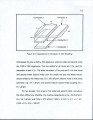
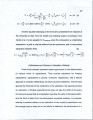
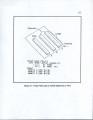
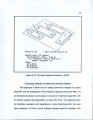
Show 2 accurately solved for paths or polygons in proximity. When these have been considered, the capacitance is usually modeled as a capacitance to ground instead of a capacitance between distinct nodes. Further, these approximations have assumed nodes to be regions instead of points. There are two directions for the analysis of capacitance or resistance: in one a single device is exhaustively analyzed to know how one transistor behaves with all of the constants and coupling values that can be imagined. In the other direction is a methodology that is circuit-wide in its approach to determine the coupling capacitance and resistance in interconnect. ACRE is suited to the second approach because the installed primitives deal with measurement of circuit dimensions, quick lookups, and convenient data storage. Industrial parasitic extraction programs for the analysis of integrated circuits stop short of determining the fringing capacitance between paths in proximity for two reasons: First is the explosion of data that occurs as a circuit would have n2 entries in a complete internodal capacitance table when there are n nodes in a circuit, and the second is the complexity of determining capacitance between nodes when the variables include path width, path height, separation of geometries, dielectric properties, and the effects of neighboring geometries. The need to determine accurate fringing capacitance is one of the main requirements for determining circuit performance. The capacitance on long signal lines can ruin the edges of the propagating signals, and the noise |