| OCR Text |
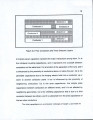
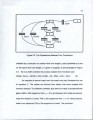
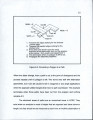
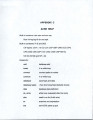
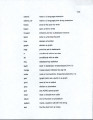
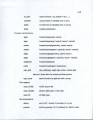
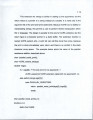
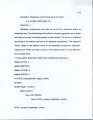
Show 69 placed the resistance between nodes and the pointers to the nodes. Nodes are the lowest level objects and the most abundant. They contain a name and a reference to a list of geometries, which is used to traverse a connectivity net. They act to accumulate capacitance without regard to the second node, providing a convenient way to get a total capacitance on a node without a database. Polygons point directly to nodes whereas paths point indirectly to them. The Foreach Statements in ACRE The 'foreach' statements in ACRE provide the means to decompose larger objects into their smaller members. It is a 'foreach' iterator that breaks a layer into its component geometries, a geometry into its edges, a database into its entries, a connectivity net into nodes, and apportions capacitance across nodes. Ten different operations are allowed with the 'foreach' operator including pair-wise versions of the above operations. The actions of the 'foreach' operator are brought into one set here, where they were distributed through out the previous chapter. A succinct description is available in Appendix C, which has the online help of ACRE. One-Layer Analysis To go through the geometries on one layer and perform some function, the 'foreach' iterator has the following form: "foreach ( layer (<expr>) <geom_name> )." For example, to cycle through every path and polygon on |