| OCR Text |
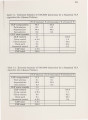
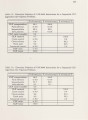
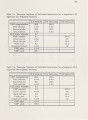
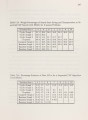
Show 273 its effectiveness in multiple constraint-based CLP search [68). 2. Increasing depth parallelism. Intuitively, one might think that perhaps individual processor speed is not so important if we have a thousand, or a million processors working in parallel; probably delays in individual processors will be 'masked' by the large amount of concurrency. Unfortunately, this is not the case. Amdahl's law [44] indicates that even a small amount of unparallelized code can have a large effect on system performance. Even on a very powerful parallel multiprocessor computer, net computing speed will have to depend on the relative amount of sequential processing that must be done on one processor. For large size search problems, depth parallelism in sequential depth-first search (see instructions spent on search cruise portion, in Tables 7 .25, 7.26 and 7 .27) must be explored and utilized. Research in this direction has been pursued for a parallel CLP3 architecture [68]. 3. Develop special-purpose machine to execute logic program for constraint satisfaction. Logic programming has been used for solving constraint satisfaction problem with an efficiency comparable to codes written in imperative languages. [81]. The separation of semantics from control in logic programming is the potential for parallelism. Although much research in this area has concentrated on exploiting AND- and OR-parallelism [25,113], there are many places where the performance is limited by the mismatch (i.e., entropy) between the abstract machine and the architecture. Clearly, a system designed exclusively for the use of parallel execution in logic programmings could significantly improve the performance. 4. Extending the domain of important application. Important extensions are often referred to as not significant because they fail to demonstrate their range of application. Applications are the only way to enhance the credibility of any ideas and theories. We need to solve efficiently and elegantly many engineering |