| OCR Text |
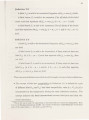
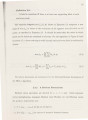
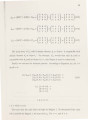
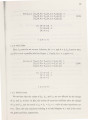
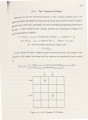
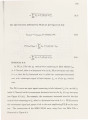
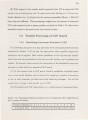
Show 111 Therefore, matrix Ci,i( k, p) contains all positional compatibility relations between queen i and queen j if they were placed on the kth row and the Pth row , respectively. Assume n = m = 4, position-pair compatibilities for object-pair, i.e., queen 0 and queen 1, are described by Ca,1 , for example: [ Co,t(O, 0) Ca,t (0, 1) Co,1(0, m -1) l Ca,t Ca,t (1, 0) Ca,t (1, 1) Co,t(1, m- 1) = Ca,t ( m - 1, 0) Ca,t(m- 1, 1) Ca,t(m- 1, m- 1) mxm columna column1 column2 column3 columna 0 0 1 1 = ( 4.4) column1 0 0 0 1 column2 1 0 0 0 column3 1 1 0 0 4X4 Ca,t (0, 0) means the compatibility between a queen at the Oth column and the Oth row and a queen at the 13 t column and the Oth row also. Obviously this is not allowed, so the compatibility value is zero. For Ca,1 (0 , 2) , the situation is different. A queen at the Oth column and the Oth row does not attack a queen at the 13 t column and the 2nd row at all. So their positions are compatible, i.e., Ca,1 (0, 2) = 1. The other Ci,i ( k, p) matrixes can be produced similarly by applying R to every pair of queen 's positions, which can easily be done. 4.2 Multiple Relational Constraints Based CLP Search It is often the case that more than one type of constraint relation exists. A natural outcome in this situation is to apply the multiple semantic relations to solve a CLP search problem. |