| OCR Text |
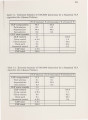
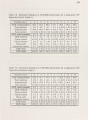
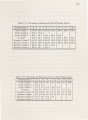
Show 240 3. regularity index is proportional to different problem size in almost a precise linear relation (as shown in Table 7.12). That is, for all problem instances experimented so far, regularity indexes fit into one and (almost) only one line with slop ranging from 20.8 to 21.9 (perhaps due to the imperfect machine). Both regularity index and workload distribution [in (B)] present one of the micro insights to the inherent feature of the computing structure (in this case, a sequential DRA algorithm implemented on a VAX - 8600 machine by an individual). Their problem-independence and problem-size linearity permit one to predict a heuristic performance without execution of large size problems. Several performance analysis models for AI search along this direction have been studied and proposed [68]. (D) Compared to the amount of work in sequential DRA computation, search-state saving and transportation show an insignifica~t fraction of the entire search work in the sequential CLP cases. In the above n-queens problem runs, it took only 1. 7% to 0.3 % of the total number of machine instructions executed and appeared in a decreasing manner as the size of the search problem grows (same in the other problems). This situation, however, is not true in parallel CLP search. Table 7.12. Increments of the Regularity Index vs. the Problem Size Increment. I Size Increment 8n I 4+-5 I 5+-6 I 6+-7 I 7 +-8 I 8+-9 I 9+-10 I Cyclic Graph 1 20.8 21.2 21.5 21.7 21.7 21.7 Cyclic Graph 2 21.1 Cyclic Graph 3 20.9 21.2 21.4 21.6 N-queens 21.2 21.3 21.9 21.9 22.1 21.9 Complete Graph 2 20.8 21.2 21.5 21.6 21.7 21.7 Random Graph 1 20.8 21.1 21.3 21.7 21.4 21.6 Random Graph 2 21.0 21.4 21.3 21.6 Random Graph 3 21.0 21.3 |