| OCR Text |
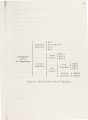
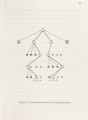
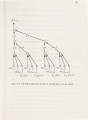
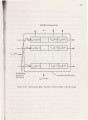
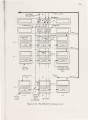
Show 242 first search within one of the m search trees, can simply be speeded up in a similar way by introducing parallel, multiple processors with some static and/ or dynamic task partitioning and load balancing schemes. The computation paradigms in this track are called split-depth search {SDS). In particular for a CLP search problem, there are usually some postprocessing algorithms and techniques which are required after a number of partial or subsolutions are obtained. Currently, several splitdepth search algorithms, e.g., equal-depth SDS, equal-node SDS and equal-load SDS were proposed and have been investigated. There has also been some effort in developing much more efficient search techniques in which SBS and SDS algorithms are combined. (C) Although its weight in sequential CLP is negligible, the time spent on the low-level sequential CLP computation still takes a considerable percentage of the total work. It is generally believed that search-state saving and search-state transportation are very expensive in any backtracking search problems. The ideas of using parallel processing techniques for search-state saving and communication were investigated. (D) There is a great deal of parallelism in (bottom-level) sequential DRA computation. Parallel DRA algorithms and hardware architectures described in Chapter 6 eliminate this bottleneck. To make good use of the four levels of parallelism has been the top concern in this thesis research. As developed through this thesis, there has been a wealth of parallel algorithms and architectures at the bottom level (for DRA heuristic), at the low level (for search-state saving and transportation) and at the top level (for paralleling m search branches). The work for parallel processing at the middle CLP level has been concentrated on the algorithm aspect. Hardware architecture for middle-level CLP parallel computation could be complicated and is more general |