| OCR Text |
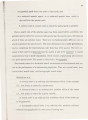
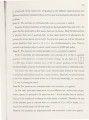
Show 91 to find a common basis of a heuristic, we claim that the existence of inconsistencies among different notions of heuristics are reasonable and inevitable. In studying creative individuals, psychologists have long found and concluded that although there are many traits of creative individuals that are common, it is evident that there are some which are in many ways contradictory and there is no creative individual who has all the traits.6 Similarly, different AI researchers have often applied the term heuristic to rather different aspects of their projects. Due to uncertainty (incomplete information, partial insight, for example) at the beginning of problem-solving, most concepts for a heuristic so far are defined empirically without considering practical performance of the heuristic. Quite com-monly in AI, an elegant heuristic theory, when tested on a computer, results in a complete failure (due to some practical factors such as resource linlits or inefficient mapping). Moreover, due.,to irrelevant abstraction, some definitions of a heuristic are too general to provide any detailed information about that heuristic (e.g., the first sentence of Section 3.4 in this thesis). To remedy empirical uncertainty and meaningless generality, a performance model that contains a set of performance measurements for heuristic quality is proposed (in Section 3.4.2). Criteria proposed in this model are based on practical analysis and firm engineering background. It is our desire to cover a wide range of positive and negative effects in both theoretical and practical aspects of the problems. Previous discussion about heuristics in backtracking search can be summarized as: 6 See, for example, J . W. Haefele, Creativity and Innovation, Reinhold Publishing Corporation, New York, 1962. M. I. Stein, Stimulating Creativity, Vol. 1, Academic Press, New York, 1974. A. Rothenberg and B. Greenberg, The Index of Scientific Writings on Creativity: General 1566-1974, The Shoe String Press, Connecticut, 1976. R. A. Prentky, Creativity and Psychopathology, Praeger Publishers , New York , 1980. D. K. Simonton, Genius, Creativity, and Leadership, Harvard University Press, Cambridge, 1984. |