| OCR Text |
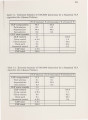
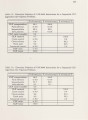
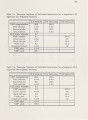
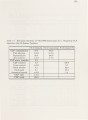
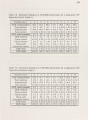
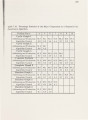
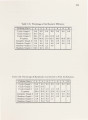
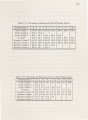
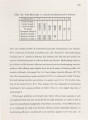
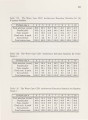
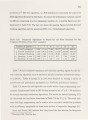
Show 272 derived from years of studying the behavior of actual systems. Special-purpose design has~ been isolated from user-friendly general-purpose computation environment. All that is needed is to interface a special-purpose device to a general-purpose host machine or build some general-purpose computing facility along with the special-purpose system, so that one can gain high performance through general computation environment (the idea is that those portions of computation which contain tremendous amounts of (spatial and/or temporal) data entropy should be avoided, or should be limited below certain constant levels without affecting peak computing performance). On the other hand, however, there has been an increasing demand from research areas in general-purpose computation for domain-specific algorithms, application-driven software and special-purpose architectures, which has been a trend in new generation of computation [81,113,199). This thesis research is strongly user-directed and performance-driven development. Our approach might have drawbacks in cases where one is favored with conventional programming techniques or in cases where there is no performance requirement. 8.1 Future Work Based on our experience in this research, we consider the following issues worthy of further investigation. 1. Increasing knowledge strength and search accuracy. There is still a large amount of parallel DRA5 instructions that constitutes unavoidable sequential computing steps in parallel CLP1 machine (see Tables 7.25, 7.26 and 7.27). To decrease the amount of sequential codes in this portion is extremely difficult and can only be accomplished by increasing knowledge strength and heuristic efficiency. The parallel CLP2 architecture that is equipped with the mDRA heuristic has demonstrated |