| OCR Text |
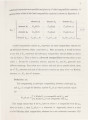
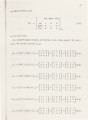
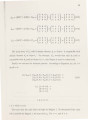
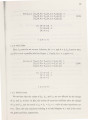
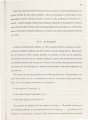
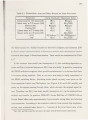
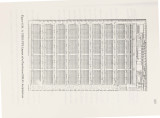
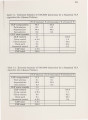
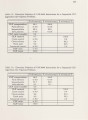
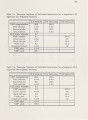
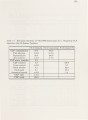
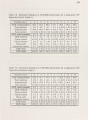
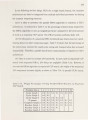
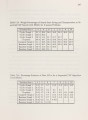
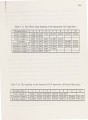
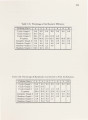
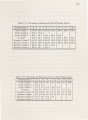
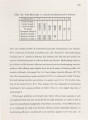
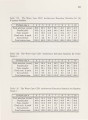
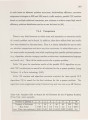
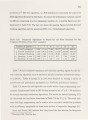
Show 255 among all search branches, and its minimum execution time to find one solution is determined by the shortest search time in one search branch where the first solution is found. In general, the speedup figure for such a problem (with uneven load distribution) is one between those listed in Table 7.17 and Table 7.18. To find all solutions on a real CLPl machine (for those problem instances listed in Table 7.17 and Table 7.18) would take a few micro seconds if the system clock runs at several tens of MHz (common in a 1.0 Jl CMOS technology) or several hundreds of nanoseconds if the system clock runs at several hundreds of MHz (common in a 1.0 Jl GaAs and MOSAIC wafer technologies). 7 .4.2 Backtracking Intensity and Search Accuracy Observations were also made on those issues that are associated with knowledge strength, backtracking intensity and the accuracy of the CLP search (see Section 3.4.2). Ofalargesetofparametersanddatastudied, Tables7.19, 7.20, 7.21 and 7.22 give several first order analyses of the heuristic efficiency ( Hef Jicienc/0 ), percentage of backtracks contributed to find all (nonempty) solutions (Bcontributed), percentage of backtracks wasted during the entire course of search (Bwaated), 11 percentage of backtracks spent on tree search cruise (Bcruiae) and average backtracking statistics per solution. Table 7.19 to a great extent presents the degree of knowledge strength or the tightness of constraints. The regularity of the network structures and the property (e.g., randomness) of the relations directly affect heuristic efficiency. For example, 10The Heuristic Efficiency is defined as the ratio (in percentage) of the amount of heuristic work contributed to find solutions divided by the total heuristic work during the entire search. 11 In cases that there is no any solutions exist, this table then represents the entire work spent on searching for empty solution (solution category 5 in Section 1.2.1) |