| OCR Text |
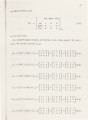
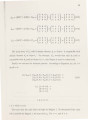
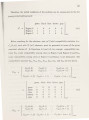
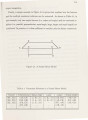
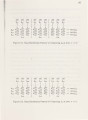
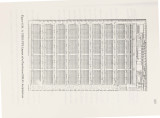
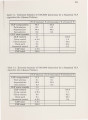
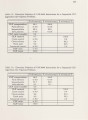
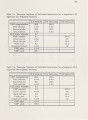
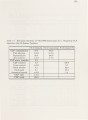
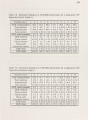
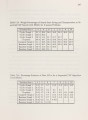
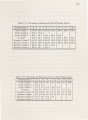
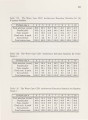
Show 237 (A) The sequential DRA algorithm has been identified as the most critical bottleneck that severely slows down a sequential CLP search. This effect, a.s shown in Table 7.1 through Table 7.9, takes up to 93.9% to 99.3% of the entire CLP search work and almost all of the work in the CLP computation portion. This author has also made many real program runs in terms of different optimization techniques and problem instances and found that a sequential DRA could weigh 37.0 % to 99.99 % of the entire computation work, depending on the heuristics and optimization techniques applied. Haralick et al. (Table 1 in [70]) indicated that the number of arc consistency tests could be reduced by 1.1 fold (for the 4-queens problem) to 6.3 fold (for the 10-queens problem) by using the forward checking algorithm. It is evident, however, that the amount of work for arc consistency testing still remains the dominant time-limiting factor. (B) Of the amount of work spent on sequential DRA execution, addressing and accessing of the huge volume of multidimensional data array takes most of the time, as verified in Table 7.10. Although different problem instances were tested, the percentage of work executed in sequential DRA remains fairly constant. (C) A regularity index of DRA is defined as the total number of machine instructions executed for the DRA algorithm divided by the total number of label-pair tests, i.e., R(DRA,pair-test). Table 7.11 shows the evidence that, 1. although a great amount of machine instructions were spent on the sequential DRA computation, most machine instructions for DRA computation were executed within a very narrow computing range. Parallelizing this "small computing range" could speed up the computation. 2. regularity index is independent of the network structure and relational constraint for a wide range of problem instances studied. |