| OCR Text |
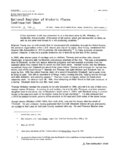
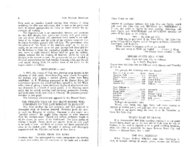
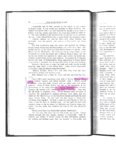
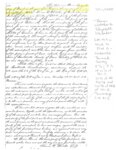
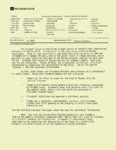
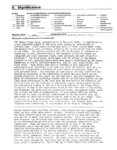
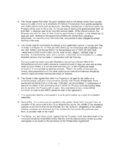
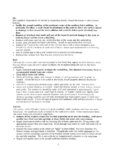
Show 70 EAST OF ANTELOPE ISLAND Centerville had its first sawmill at the mouth of the canyon on Deuel Creek. It was owned and operated by Billie Williams. The lumber was sawed with a pit saw operated by digging a large hole or hollow, with logs across each end so the large logs could be rolled on it. One man standing in the bottom of the pit and O:le on top operated the saw. Later Alwood Brown had a steam engine for operating a saw. Charles Duncan, Sr., and his three sons, John, Charle3, and Archibald, were the pioneer rock masons of Centerville and Davis County. The first blacksmith shop was owned and operated by William Deuel; Simon Dalton also did blacksmithing at a very early date. The second was on the lot where the Fred Walton home now stands. John Myers was the blacksmith. The third one was by Henry Yates on the Waddoups lot across the street east of Bishop Tingey's home, and the fourth was owned and operated by James Baird across the street east of Millie Smith's home on the main highway. It was here B. H. Roberts learned the trade of blacksmithing, being apprenticed to James Baird. Later Henry J . Rampton was the town blacksmith in the same building. Ebenezer Cherry was a cooper by trade and made barrels to hold sorghum, soap, ashes, or for curing meat. These barrels were made on the land where the Burgin home now stands. Richard Prophet, Abram Orr, and John Tree were the early shoemakers, making and repairing shoes. John Holland was a tailor by trade, and also operated the first store. Centerville's early carpenters were John J . Harris, Thomas Whittaker, William Capener, and Alfred Randall. John J . ~Tis o.wned tup'hing lathe and made utensils such as rolling pins and potato mashers. Some of these articles are still in the possession of the descendants of the early pioneers. Thomas Whittaker and William Capener did cabinet work, making all kinds of furniture . They also did all kinds of carpenter work. Alfred Randall made all kinds of furniture but specialized in building sawmills, flour mills, and was called by the Church to go to the Sandwich Islands and build the first sugar factory there. He also built the first barns in Centerville, morticing them together. He built a large barn for Charles C. Rich on what is now the John W . Woolley farm . He also built the barn that formerly stood on the lot where the McIntyre and Clayton homes now stand. He also made and morticed the roof of the East Bountiful Chapel. Philip James Garn was Centerville's earliest wheelwright. The first hay and grain was cut with scythe and cradle. Joseph Cherry brought the first reaping machine to Centerville. John W. Woolley and Nathan T. Porter owned the first self-binding machine for cutting and binding grain that was brought to Centerville, and a- r,"1 Thomas Harris OW l ha y for all of his nei Broom corn, fc. rope and to spin in settlers of Centerv not quite long enou; better in the sou the Henry Rogers ( a stone hewer, ane S al t Lake Temple, him to lose the sigt ville Meetinghouse. the housewives of baskets. The pioneers r used ; however, the The land had to 1: dra gs were made 0 The plows were m ' There were many struggle. There '" Families lived mai their neighbors. crops failed, then and shared with e<. ill their cellars or had th e same ideal. land became dry, canals that had be from the mountail brought in by the Brigham Young, w were full of bloom June. By careful ca' all kinds of fruit aJ fruit than is raised nurseryman of Cel1 had twelve walnut trees, and also gra on the Sacramentc bearing fruit on it Smith moved fron Co unt y N urse r y . and still later the |