| OCR Text |
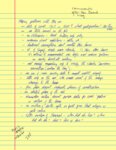
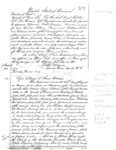
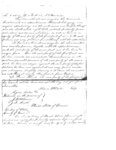
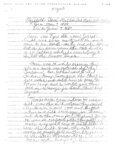
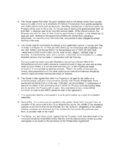
Show Chapter 22 " Father said she looked more like his mother than any of the others. One day when she was very little, she did something naughty and he saw her. He took a little stick about six inches long and said she must have a whipping. She looked up at him with those great eyes of hers and he put the stick into my hand and said, "You d-c it Liz-zre-," (he "would call me Lizzie, though I hated it, that's why I said my name was Sara, but he called me Lizzie, always). "You do it," he went on, "When she looks at me with those great eyes of hers, I can't strike her. She looks just like my mother." taught Annie to knit and to sew. We made everything by hand in those days, no sewing machines. I made all my baby clothes by hand, tiny tucks, rows and rows of them, and ruffles, embroidery, everything. And the clothes were long for babies in arms, the dresses almost touched the floor when you carried a baby. The skirts and petticoats were tucked and ruffled carefully so they hung down and showed over the arm of the mother. Boys were dressed exactly as fancy as the girls, in dresses, no distinction was made until they were at least two years old and sometimes three. My dear friend, Mary Smith, was four years younger than I. She was born in 1843, I in 1839. Her folks came from Madison County, Illinois. Her maiden name was Ricks. They were a very fine family. Her father and family moved to Nauvoo, Illinois as converts. Her father, like mine, helped build the Nauvoo Temple. They crossed the Plains in 1848 and moved to Centerville in 1849. So she actually grew up here, living first on the Ford farm. She married William R. Smith in 1857 when she was just fourteen years old. I have already told you how I met her and of later her giving birth to triplets and losing the first two and the third being born alive and lived. After we moved "down into the big house, I lived just about a block from her home which was a two story adobe brick, with a nice front porch. Our children. hers and mine were sometimes born the same time, year I mean, even same months as her fifth child, James. was born 16 of January 1868 and my Mamie Ijust a few days later on the 20th. She had nine children all told, not counting the two triplets that were born dead. 238 During those early years in Centerville we had to make our own fun and entertainment. There were no dance halls or amusement halls. nothing. We women, especially. were left alone a good part of the time while our husbands were away working. to earn a living. We did our own gardening if we had one. everything. inside and out, most of us. I had lots of good friends, but never another one so close as Mary. We found much we could dOl together and it was more pleasant "for both that way. I, myself, did nursing when I could be spared from home and this helped to get us by. I got very little money, but mostly food stuff, wheat, corn, wool for spinning and knitting, and the like. It all helped in a big family like ours. ~Jhen Sister Duncan couldn't come for a confinement, either because she was on another case or was ill, we were blessed to have a very dear lady living in Centerville, whom we called Grandmother Brown. She too was an excellent midwife and as the town grew, she was kept busy nursing the sick and helping to layout the dead. There was no doctor closer than Salt Lake for so many years. I should tell you that Sister Duncan was often called to Farmington, and even to Kaysville, as well as Bountiful. We had lots of quilting bees. When one of us would get a quilt pieced and the blocks sewn together. we'd all get together and mark the quilt and quilt the whole thing in one day. The hostess. or one whose quilt it was, would cook a nice dinner (usually quite plain, for food was scarce). We'd go first thing in the morning and stay 'til the quilt was done. Sometimes one of the others might bring the dessert, another the salad. and we'd have a real feast. We'd sit around the quilt and work like beavers, seeing who could get the most tiny stitches onto her needle at one time. Nine was the very most anyone could do, usually it was seven. and that made for a lovely looking quilt. Thread too. was hard to get, and very expensive, so we were careful not to waste so much as an inch. Knots must be small. and coaxed through the top layer of the quilt and hidden there so it would not show. We took great pride in our work then. It's hard to find such even and fine perfect quilting now. They're in too big of a hurry to get it done. As we worked, sometimes we'd sing old pioneer songs as "Come. Come Ye Saints," "Wait for 239 |