| OCR Text |
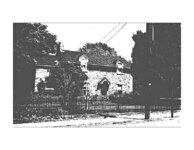
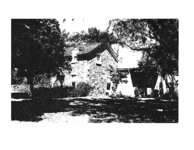
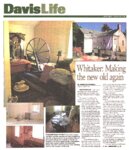
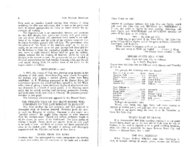
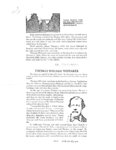
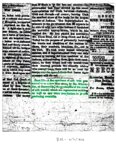
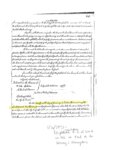
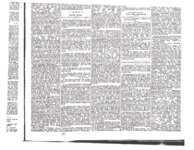
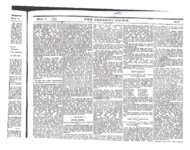
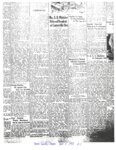
Show (. THE SILK INDUSTRY . When Thomas William Whitaker came from California in · ,1856, he brought cuttings of shrubs, grapes, walnuts and different , kinds of fruit trees, among them mulberry cuttings. These slips, or cuttings, he placed in potato slits to hold them and keep them moist until they could be planted in a suitable place. He called them the Russian Mulberry. He packed and tended them carefully as the journey was rough and difficult. Mr. Whitaker found the climate in Utah ideal for mulberry trees, and decided to tr}' his luck at raising silkworms. He sent to England for silkworm eggs which had to be kept in a cool temperature, below 50 degrees F.H., and gradually warmed in a temperature. sufficiently warm to hatch the eggs which , were spread on trays covered with tender leaves. These trays were stacked one on top of the other and placed in a warm room. The eggs hatched before the mulberry leaves were large enough, so at first he fed them lettuce from an early garden. My mother, Josephine W. Folsom, was a young child' at the time and remembers how fast the silkworms grew, hearing them eat, watching them spin the cocoon, the scalding process to kill the larvae inside the cocoon, then the soaking until the end of the thread was found and unwound. The threads from four or five cocoons were twisted together to mak~ the silk thread, which was rough and uneven at first because the silkworm eggs had been of different kinds, making different sized thread. Mrs. Whitaker had a reed for weaving woolen cloth which was too wide. When Brigham Young came to 'See the silkworms he was so pleased that he sent for a narrower reed made especially for silk weaving. Mrs. Whitaker made a scarf necktie for him from the first silk, leaving it a natural color, and later a white silk vest. The Deseret News of June 11, 1862, contains the following: "A fine 'Specimen of silk was presented to us a few days since by Mr. Whitaker, of Centerville, (from) the production of his stock silkworms which are represented as doing (as) well as any were ever known to in silk producing countries:· From the history of Mr.. Whitaker, written by his daughter, Mary Alice Parrish, we quote: "Father rented , a building in which to keep the silkworms. A room was emptied and kept perfectly clean of all odors, dust and disturbing noise, as the silkworm is extremely sensitive. It took about 12 days for the worm to grow big enough to start weaving a cocoon. At the period of moulting all old beds were discarded, the worms refusing to cat then for a period of about 48 hours. Clean trays with limbs of trees arranged on them wetf provided and the worms attached themselves to the branches and soon were encased in their own prison. Each period meant work for the whole family to provide sufficient food to keep them constantly eating and provide them with material to weave their cocoons. ' Regular feeding was repaid with ~arge cocoons with strong threads. A sort of gluten, formed in the process, had to be loosened in hot water before the thread could be unreeled." - Ethleen Hillam ( 1 - 1('; ) THEY CAME IN 18G2 11 SOMETHING NEW IN DESERET I wish to say to all those who ha.ve Mulberry trees (the Morumulticaulis), that I have succeeded in raising some fourteen hundred health}' SILK WORMS, of a large kind. Whoever may wish to avail themselves of this opportunity to secure some of these useful insects can leave their orders at Henry E. Phelps', opposite the Telegraph Office, or at H. AJ. Squire'S, opposite Jennings' store, East Temple St., Great Salt Lake City. . . . . . T. Whitaker, Centerville. The Deseret News, June 4, 18G2 |