| OCR Text |
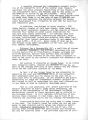
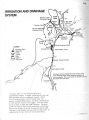
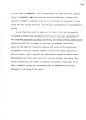
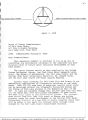
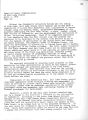
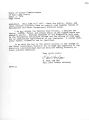
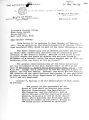
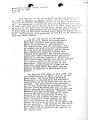
Show J* Rogers B. Morton, then the Secretary of the Interior, on November the 23rd, 1973, in approving further construction on the Bonneville Unit, stated that the stream flow issue would be resolved. The present Administration, in continuing construction on the Bonneville Unit, stated that certain environmental considerations would be addressed. But at the present time, this issue remains unresolved and construction continues. 2. Water Project Gerrymandering(or How to Hide an Outrageous Cost) - A recent study by the Utah State Water Laboratory located in Logan, Utah (see enclosure) showed that, depending upon the construction time table, the costs of completing the Bonneville Unit would be between 1.4 billion to 3 billion dollars. The lower figure would be the cost if the project is completed in 8 years, an impossibility. Further, 75% of the costs of the Bonneville Unit is being used to build the Soldier Creek-Strawberry Transbasin Diversion. This system will make available 136,000 acre feet for transbasin diversion primarily for agriculture. Thus, at a minimum this portion of the project would cost 1.05 billion dollars. This represents a cost of 7,720 dollars per acre foot of water. Projects planners have tried to hide this cost by averaging it against other more economically produced water. But using this cost and a figure of 3 acre feet per year per 200 acre farm, this represents a federal subsidy of 4.6 million dollars to create one 200 acre Utah farm. This is obviously a rough calculation, but we think it is roughly correct. When one realizes that this section of the project requires 7 reservoirs, 30 miles of tunnels through mountains, and miles of aqueduct, the cost could mount to 7,000 to 8,000 dollars per acre foot of water. We would appreciate seeing an exact figure. It is again ironic that this entire 136,000 acre feet can be delivered using project features already constructed, with very little additional cost, and very little loss of stream habitat to Utah's Uintah Basin. 3. Indian Water Rights - A major portion of the v;ater involved in the Bonneville Unit, is water owned by the Uintah and Ouray Indian tribes. On September the 20th, 1965, permission had been given by the tribes for the Central Utah Water Conservancy District to use this water in exchange for certain other benefits. On April the 21st, 1974, the tribes withdrew from participation in a court action challenging the Bonneville Unit in exchange for concrete steps by the Central Utah Water Conservancy District o expedite the development of Indian benefits. |