| Title |
Issues Paper, Central Utah Project |
| Description |
Major publication compiled by Dorothy Harvey for the Citizens for a Responsible Central Utah Project; From The Dorothy Harvey papers (1902-2005), a collection of materials focusing on the Central Utah Project (CUP), a water resource development program to use Utah's alloted share of the Colorado River. Includes correspondence, Harvey's writing drafts and notes for an unpublished book on the CUP, federal documents, project litigation materials, subject files, news clippings, newsletters, programs, brochures, and maps. |
| Subject |
Central Utah Project; Rivers--Environmental aspects--Utah; Water resources development --Environmental aspects--Utah; Irrigation--Environmental aspects--Utah; Water-supply--Utah--Salt Lake County |
| Creator |
Harvey, Dorothy |
| Contributor |
Citizens for a Responsible Central Utah Project; Power, Thomas M.; Hughes, Trevor C.; Van Dam, R. Paul |
| Alternate Title |
Economic analysis of the Bonneville Unit of the Central Utah Project, Bureau of Reclamation; Feasibility of accelerating construction of the Central Utah Project; Water resources of Salt Lake County: an alternative view |
| Additional Information |
Includes as parts of this work: An economic analysis of the Bonneville Unit of the Central Utah Project, Bureau of Reclamation, by Thomas M. Power (68 p., June 1978); Feasibility of accelerating construction of the Central Utah Project, by Trevor C. Hughes, L. Douglas James, Frank Haws, C. Earl Israelsen (27 p., Jan. 16, 1978); Water resources of Salt Lake County: an alternative view, by R. Paul Van Dam (19 p., April 3, 1978); Interim report on CUP Bonneville Unit by R. Paul Van Dam (7 p., July 5, 1977); Statement of Gerald Kinghorn, Salt Lake Asst. Co. Attorney (7 p., 1977); Letter of R. Paul Van Dam to Arthur L. Monson (15 p., Nov. 18, 1977) |
| Spatial Coverage |
Colorado River Basin (Colo.-Mexico); Duchesne River (Utah); Uinta Mountains (Utah); Uinta Basin (Utah and Colo.); Rock Creek (Duchesne County, Utah); Lower Stillwater Reservoir (Utah); Upper Stillwater Reservoir (Utah); Bottle Hollow Reservoir (Utah); Starvation Reservoir (Utah); Currant Creek Reservoir (Utah); Jordanelle Reservoir (Utah); Strawberry Reservoir (Utah); Utah Lake (Utah); Utah County (Utah); Salt Lake County (Utah); Duchesne County (Utah) |
| Collection Number and Name |
Accn2232 bx 58 fd 5; Dorothy Harvey papers |
| Rights Management |
Digital Image Copyright 2009, University of Utah. All Rights Reserved. |
| Holding Institution |
J. Willard Marriott Library, University of Utah |
| Date |
1978 |
| Digitization Specifications |
Original scanned on Epson Expression 10000 XL and saved as 400 ppi TIFF. Display image generated by CONTENTdm. |
| Publisher |
Digitized by J. Willard Marriott Library, University of Utah |
| Type |
Text |
| ARK |
ark:/87278/s6cc0zmc |
| Setname |
wwdl_neh |
| ID |
1149704 |
| Reference URL |
https://collections.lib.utah.edu/ark:/87278/s6cc0zmc |
| Title |
Page 84 |
| Setname |
wwdl_neh |
| ID |
1149572 |
| OCR Text |
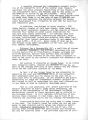
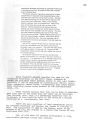
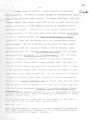
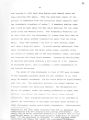
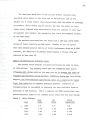
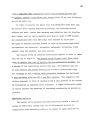
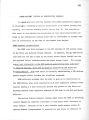
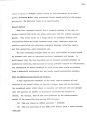
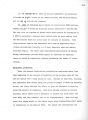
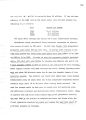
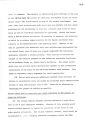
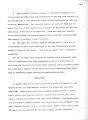
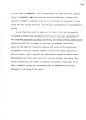
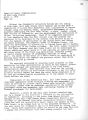
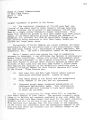
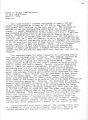
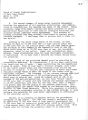
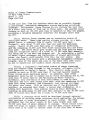
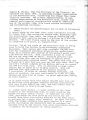
Show 2 3 77. n+tZ u- Ground water remains an important source of additional water despite problems which would accompany further development of it.* If ground water is not developed because it will affect artesian well pressures and existing well depth, a huge renewable reservoir is being abandoned to protect minor and adjustable taps on it. Any benefit-cost analysis of such restriction would clearly indicate their irrationality. Although ground-water mining need not occur, it certainly cannot be eliminated entirely from consideration. The groundwater reservoir is a resource just as is coal, oil, or copper in the ground. After full analysis of the affects of such mining and its costs, mining might be judged rational. At this point, however, renewable ground-water supplies remain ^^^dsjCA-^ yet to be tapped. The BR, citing the level of pumping during the summer of 1977, suggests that ground-water users have already reached the limits of the renewable supply established by the USGS.** This is a very misleading argument. The ^7 summer of 1977 represented the peak of one of the most severe droughts that the Wasatch Front has seen. The increased pump- tvtf ing was not, as the BR suggests, due to the historical trend -**t&AA of agricultural water are diverted but not used. If the BR projected water use of 3.2 af/a and the NASA sattelite infrared photography estimate of irrigated acreage in 1972 of 28,000 acres are used, 205,400 af are diverted but not used (p. 34). In addition, 65,000 af will be freed up by 1990 (p. 40), 23.5 percent of this total is 63,550 af to 43,500 af. *See the U.S. Geological Survey Studies of the Jordan Valley. Cited on pp. 42-43 of the "208 Study," op_^ cit. **BR, "Bonneville Unit: Alternative Plans," p. 4. <^*/t*_. fa\A |
| Reference URL |
https://collections.lib.utah.edu/ark:/87278/s6cc0zmc/1149572 |