| Title |
Issues Paper, Central Utah Project |
| Description |
Major publication compiled by Dorothy Harvey for the Citizens for a Responsible Central Utah Project; From The Dorothy Harvey papers (1902-2005), a collection of materials focusing on the Central Utah Project (CUP), a water resource development program to use Utah's alloted share of the Colorado River. Includes correspondence, Harvey's writing drafts and notes for an unpublished book on the CUP, federal documents, project litigation materials, subject files, news clippings, newsletters, programs, brochures, and maps. |
| Subject |
Central Utah Project; Rivers--Environmental aspects--Utah; Water resources development --Environmental aspects--Utah; Irrigation--Environmental aspects--Utah; Water-supply--Utah--Salt Lake County |
| Creator |
Harvey, Dorothy |
| Contributor |
Citizens for a Responsible Central Utah Project; Power, Thomas M.; Hughes, Trevor C.; Van Dam, R. Paul |
| Alternate Title |
Economic analysis of the Bonneville Unit of the Central Utah Project, Bureau of Reclamation; Feasibility of accelerating construction of the Central Utah Project; Water resources of Salt Lake County: an alternative view |
| Additional Information |
Includes as parts of this work: An economic analysis of the Bonneville Unit of the Central Utah Project, Bureau of Reclamation, by Thomas M. Power (68 p., June 1978); Feasibility of accelerating construction of the Central Utah Project, by Trevor C. Hughes, L. Douglas James, Frank Haws, C. Earl Israelsen (27 p., Jan. 16, 1978); Water resources of Salt Lake County: an alternative view, by R. Paul Van Dam (19 p., April 3, 1978); Interim report on CUP Bonneville Unit by R. Paul Van Dam (7 p., July 5, 1977); Statement of Gerald Kinghorn, Salt Lake Asst. Co. Attorney (7 p., 1977); Letter of R. Paul Van Dam to Arthur L. Monson (15 p., Nov. 18, 1977) |
| Spatial Coverage |
Colorado River Basin (Colo.-Mexico); Duchesne River (Utah); Uinta Mountains (Utah); Uinta Basin (Utah and Colo.); Rock Creek (Duchesne County, Utah); Lower Stillwater Reservoir (Utah); Upper Stillwater Reservoir (Utah); Bottle Hollow Reservoir (Utah); Starvation Reservoir (Utah); Currant Creek Reservoir (Utah); Jordanelle Reservoir (Utah); Strawberry Reservoir (Utah); Utah Lake (Utah); Utah County (Utah); Salt Lake County (Utah); Duchesne County (Utah) |
| Collection Number and Name |
Accn2232 bx 58 fd 5; Dorothy Harvey papers |
| Rights Management |
Digital Image Copyright 2009, University of Utah. All Rights Reserved. |
| Holding Institution |
J. Willard Marriott Library, University of Utah |
| Date |
1978 |
| Digitization Specifications |
Original scanned on Epson Expression 10000 XL and saved as 400 ppi TIFF. Display image generated by CONTENTdm. |
| Publisher |
Digitized by J. Willard Marriott Library, University of Utah |
| Type |
Text |
| ARK |
ark:/87278/s6cc0zmc |
| Setname |
wwdl_neh |
| ID |
1149704 |
| Reference URL |
https://collections.lib.utah.edu/ark:/87278/s6cc0zmc |
| Title |
Page 82 |
| Setname |
wwdl_neh |
| ID |
1149570 |
| OCR Text |
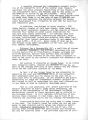
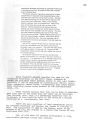
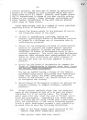
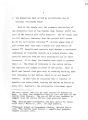
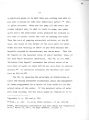
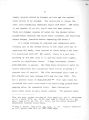
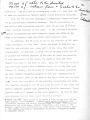
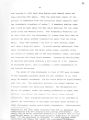
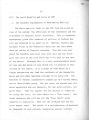
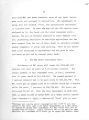
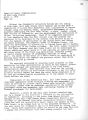
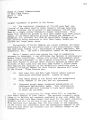
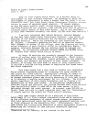
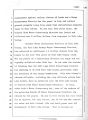
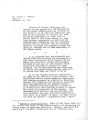
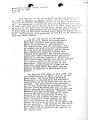
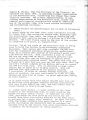
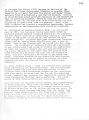
Show 21 h<j/-o 77. of Utah.* The study concludes:* res Generally the model shows an increase in *]$ QoO A/ idential and municipal water use (70,900 ' u ( £~ -> 6/ af//yr^ a n d sPe c i a l use (10,000 af/yr) . A lo OOo ^/ V £> }0OO ft decrease is shown in irrigation use (65,000 ~ '~~l ' / % <TOO ./ af/yr) and stock use (3,500 af/yr). The net ^ • ' 0 ° *J __j 3 _., / overall water use shows an increase of 12,000 / r S O O <z/ a f/yr o r a n increase of about 2 percent (by _. £©• C(5c? 6 *_ /) the year 1990)." "_ ; . •/* 1°-° <6 The study then lists six recognizable, Bonnes.lie Basin ' sources which might be tapped to provide the additional culinary water. These total 280,000 af/yr.*** In addition to these, there could have been added the 68,500 af/yr of irrigation water which urban development will "free up." This makes a total of 348,500 af/yr of available water resources of varying quality and cost to manage to cover the projected deficit of 71,000 af/yr in culinary water.**** The 71,000 af/yr deficit need not necessarily appear. If conservation measures including pricing policies combined with natural demographic trends towards higher density living situations could reduce per capita water use 8 percent over the next 17 years (1/2 of 1 percent decline each year), the deficit would never come into existence. The sensitivity of household consumption of water to price levels (the price elasticity of demand) has been estimated for urban households in Northern Utah. It indicates that a 10 percent increase in Ksdr J :0p. cit ** Op. cit., p. 40. ***0p. cit., p. 40 ****Most of this water could not be used directly for culinary purposes because of its quality. However, low cost treatment, exchanges for higher quality water, etc. could make much of it available for culinary purposes at far lower cost than CUP water. |
| Reference URL |
https://collections.lib.utah.edu/ark:/87278/s6cc0zmc/1149570 |