| Title |
Issues Paper, Central Utah Project |
| Description |
Major publication compiled by Dorothy Harvey for the Citizens for a Responsible Central Utah Project; From The Dorothy Harvey papers (1902-2005), a collection of materials focusing on the Central Utah Project (CUP), a water resource development program to use Utah's alloted share of the Colorado River. Includes correspondence, Harvey's writing drafts and notes for an unpublished book on the CUP, federal documents, project litigation materials, subject files, news clippings, newsletters, programs, brochures, and maps. |
| Subject |
Central Utah Project; Rivers--Environmental aspects--Utah; Water resources development --Environmental aspects--Utah; Irrigation--Environmental aspects--Utah; Water-supply--Utah--Salt Lake County |
| Creator |
Harvey, Dorothy |
| Contributor |
Citizens for a Responsible Central Utah Project; Power, Thomas M.; Hughes, Trevor C.; Van Dam, R. Paul |
| Alternate Title |
Economic analysis of the Bonneville Unit of the Central Utah Project, Bureau of Reclamation; Feasibility of accelerating construction of the Central Utah Project; Water resources of Salt Lake County: an alternative view |
| Additional Information |
Includes as parts of this work: An economic analysis of the Bonneville Unit of the Central Utah Project, Bureau of Reclamation, by Thomas M. Power (68 p., June 1978); Feasibility of accelerating construction of the Central Utah Project, by Trevor C. Hughes, L. Douglas James, Frank Haws, C. Earl Israelsen (27 p., Jan. 16, 1978); Water resources of Salt Lake County: an alternative view, by R. Paul Van Dam (19 p., April 3, 1978); Interim report on CUP Bonneville Unit by R. Paul Van Dam (7 p., July 5, 1977); Statement of Gerald Kinghorn, Salt Lake Asst. Co. Attorney (7 p., 1977); Letter of R. Paul Van Dam to Arthur L. Monson (15 p., Nov. 18, 1977) |
| Spatial Coverage |
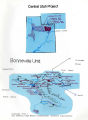
Colorado River Basin (Colo.-Mexico); Duchesne River (Utah); Uinta Mountains (Utah); Uinta Basin (Utah and Colo.); Rock Creek (Duchesne County, Utah); Lower Stillwater Reservoir (Utah); Upper Stillwater Reservoir (Utah); Bottle Hollow Reservoir (Utah); Starvation Reservoir (Utah); Currant Creek Reservoir (Utah); Jordanelle Reservoir (Utah); Strawberry Reservoir (Utah); Utah Lake (Utah); Utah County (Utah); Salt Lake County (Utah); Duchesne County (Utah) |
| Collection Number and Name |
Accn2232 bx 58 fd 5; Dorothy Harvey papers |
| Rights Management |
Digital Image Copyright 2009, University of Utah. All Rights Reserved. |
| Holding Institution |
J. Willard Marriott Library, University of Utah |
| Date |
1978 |
| Digitization Specifications |
Original scanned on Epson Expression 10000 XL and saved as 400 ppi TIFF. Display image generated by CONTENTdm. |
| Publisher |
Digitized by J. Willard Marriott Library, University of Utah |
| Type |
Text |
| ARK |
ark:/87278/s6cc0zmc |
| Setname |
wwdl_neh |
| ID |
1149704 |
| Reference URL |
https://collections.lib.utah.edu/ark:/87278/s6cc0zmc |
| Title |
Page 69 |
| Setname |
wwdl_neh |
| ID |
1149557 |
| OCR Text |
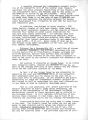
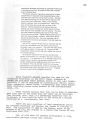
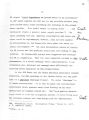
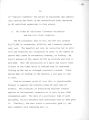
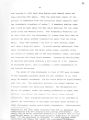
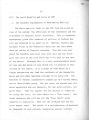
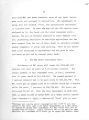
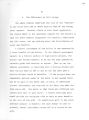
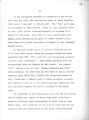
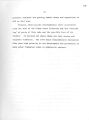
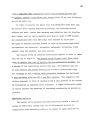
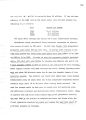
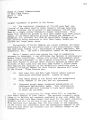
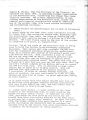
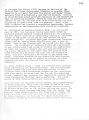
Show ex 8 valuable uses of the water have already been exploited. Those remaining yield lower returns. This difference between the average productivity of water and the productivity of an additional unit of water (the marginal productivity of water) is important. If diminishing returns exist, the former (average value) is always more than the latter (the marginal value). The BR would have discovered part of this if they had calculated the benefits of supplemental water. This would be done by studying an irrigated farm, giving that irrigated farm an additional half acre-foot of water and seeing how much net income increased. The BR did not do this. Instead, it assigned to supplemental users the average benefits de-rived from a typical fully irrigated farm. Although the BR did not bother to study the value of supplemental water in particular, and the value of additional water to a particular agricultural region in general, water economists at the Water Research Laboratory at Utah State University have studied this question since at least 1973.* Their results are consistent with the results found in other arid states such as Arizona and Colorado** and with one of *See, for instance, "The Demand for Agricultural Water in Utah," Mark H. Anderson, PRWG 100-4, Utah Water Research Laboratory, Utah State University, September 1973. See, for instance, Kelso et al., Water Supplies and Economic Grt•o wth in an Arid Environm_e__n__t , University of Arizona, 1973; Marginal Values of Irrigation Water, Technical Bulletin 70, Agricultural Experiment Station, Colorado State University, 1960; Herbert Blank, "Optimal Irrigation Decisions with Limited |
| Reference URL |
https://collections.lib.utah.edu/ark:/87278/s6cc0zmc/1149557 |