| Title |
Issues Paper, Central Utah Project |
| Description |
Major publication compiled by Dorothy Harvey for the Citizens for a Responsible Central Utah Project; From The Dorothy Harvey papers (1902-2005), a collection of materials focusing on the Central Utah Project (CUP), a water resource development program to use Utah's alloted share of the Colorado River. Includes correspondence, Harvey's writing drafts and notes for an unpublished book on the CUP, federal documents, project litigation materials, subject files, news clippings, newsletters, programs, brochures, and maps. |
| Subject |
Central Utah Project; Rivers--Environmental aspects--Utah; Water resources development --Environmental aspects--Utah; Irrigation--Environmental aspects--Utah; Water-supply--Utah--Salt Lake County |
| Creator |
Harvey, Dorothy |
| Contributor |
Citizens for a Responsible Central Utah Project; Power, Thomas M.; Hughes, Trevor C.; Van Dam, R. Paul |
| Alternate Title |
Economic analysis of the Bonneville Unit of the Central Utah Project, Bureau of Reclamation; Feasibility of accelerating construction of the Central Utah Project; Water resources of Salt Lake County: an alternative view |
| Additional Information |
Includes as parts of this work: An economic analysis of the Bonneville Unit of the Central Utah Project, Bureau of Reclamation, by Thomas M. Power (68 p., June 1978); Feasibility of accelerating construction of the Central Utah Project, by Trevor C. Hughes, L. Douglas James, Frank Haws, C. Earl Israelsen (27 p., Jan. 16, 1978); Water resources of Salt Lake County: an alternative view, by R. Paul Van Dam (19 p., April 3, 1978); Interim report on CUP Bonneville Unit by R. Paul Van Dam (7 p., July 5, 1977); Statement of Gerald Kinghorn, Salt Lake Asst. Co. Attorney (7 p., 1977); Letter of R. Paul Van Dam to Arthur L. Monson (15 p., Nov. 18, 1977) |
| Spatial Coverage |
Colorado River Basin (Colo.-Mexico); Duchesne River (Utah); Uinta Mountains (Utah); Uinta Basin (Utah and Colo.); Rock Creek (Duchesne County, Utah); Lower Stillwater Reservoir (Utah); Upper Stillwater Reservoir (Utah); Bottle Hollow Reservoir (Utah); Starvation Reservoir (Utah); Currant Creek Reservoir (Utah); Jordanelle Reservoir (Utah); Strawberry Reservoir (Utah); Utah Lake (Utah); Utah County (Utah); Salt Lake County (Utah); Duchesne County (Utah) |
| Collection Number and Name |
Accn2232 bx 58 fd 5; Dorothy Harvey papers |
| Rights Management |
Digital Image Copyright 2009, University of Utah. All Rights Reserved. |
| Holding Institution |
J. Willard Marriott Library, University of Utah |
| Date |
1978 |
| Digitization Specifications |
Original scanned on Epson Expression 10000 XL and saved as 400 ppi TIFF. Display image generated by CONTENTdm. |
| Publisher |
Digitized by J. Willard Marriott Library, University of Utah |
| Type |
Text |
| ARK |
ark:/87278/s6cc0zmc |
| Setname |
wwdl_neh |
| ID |
1149704 |
| Reference URL |
https://collections.lib.utah.edu/ark:/87278/s6cc0zmc |
| Title |
Page 163 |
| Setname |
wwdl_neh |
| ID |
1149651 |
| OCR Text |
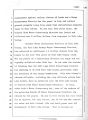
Show /S£ Board of County Commissioners of Salt Lake County April 3, 1978 Page three government. Recent events demonstrate the danger of complete reliance on the federal government. An article in the Deseret News (February 17, 1978) revealed that the earliest conceivable date for completion of the Bonneville Unit of the Central Utah Project--the solution currently being pushed by the existing water managers--is about 1993. This completion date assumes that funding will be forthcoming at the rates currently scheduled, that additional environmental lawsuits do not result in unscheduled delays, that the Ute Indians do not withdraw support from the project, and that while the rest of the government undergoes economic belt-tightening, Utah will get its full share of the pie. Congressman Marriott has emphasized the concern that, under j federal leadership, by the time the project is completed costs \\ will outweigh benefits. I question any expenditure of taxpayers monies by which, in spending one dollar, the taxpayer receives less than one dollar in return. I would never invest my own money in a venture with a negative return and I cannot sit by idly while the taxpayers of Salt Lake City and Salt Lake County have such investments made for them. B. The second issue raised by my first study questions my "standing" as County Attorney to engage in this study and my ability to carry out such a complex investigation. As a county-wide elected official, I feel it is my obligation, as it is yours, to provide the consumers with information which will lead to open j and public discourse on the alternatives for water utility development. Hopefully, this will result in a more democratic approach to the solution of a common problem. When any single water project looms so large in the taxpayer's future, I feel it is my duty to speak out on behalf of the electorate. There appears to be no one operating on their behalf-no one to expose the costs of current water policy planning or the alternatives, or the amounts to which the electorate are being individually committed through taxation by non-elected officials. The people of Salt Lake County have been taught to live in fear of impending disaster from drought. M The water management system of Salt Lake County, unlike that of Salt Lake City, is not directly responsive to the electorate nor to the free market system--it is a self-appointed and self-propa- I gating entity with taxing powers but with no public accountability,! Someone must step in to fill the void. I have chosen to be that spokesman. Opponents of this study have also challenged my ability to j| conduct a study of such a complex nature. These opponents argue /J that I should leave it to them--that they will take care of our needs. I have no doubt that they will. However, in view of the oversights and misrepresentations which have been made concerning |
| Reference URL |
https://collections.lib.utah.edu/ark:/87278/s6cc0zmc/1149651 |