| Title |
Issues Paper, Central Utah Project |
| Description |
Major publication compiled by Dorothy Harvey for the Citizens for a Responsible Central Utah Project; From The Dorothy Harvey papers (1902-2005), a collection of materials focusing on the Central Utah Project (CUP), a water resource development program to use Utah's alloted share of the Colorado River. Includes correspondence, Harvey's writing drafts and notes for an unpublished book on the CUP, federal documents, project litigation materials, subject files, news clippings, newsletters, programs, brochures, and maps. |
| Subject |
Central Utah Project; Rivers--Environmental aspects--Utah; Water resources development --Environmental aspects--Utah; Irrigation--Environmental aspects--Utah; Water-supply--Utah--Salt Lake County |
| Creator |
Harvey, Dorothy |
| Contributor |
Citizens for a Responsible Central Utah Project; Power, Thomas M.; Hughes, Trevor C.; Van Dam, R. Paul |
| Alternate Title |
Economic analysis of the Bonneville Unit of the Central Utah Project, Bureau of Reclamation; Feasibility of accelerating construction of the Central Utah Project; Water resources of Salt Lake County: an alternative view |
| Additional Information |
Includes as parts of this work: An economic analysis of the Bonneville Unit of the Central Utah Project, Bureau of Reclamation, by Thomas M. Power (68 p., June 1978); Feasibility of accelerating construction of the Central Utah Project, by Trevor C. Hughes, L. Douglas James, Frank Haws, C. Earl Israelsen (27 p., Jan. 16, 1978); Water resources of Salt Lake County: an alternative view, by R. Paul Van Dam (19 p., April 3, 1978); Interim report on CUP Bonneville Unit by R. Paul Van Dam (7 p., July 5, 1977); Statement of Gerald Kinghorn, Salt Lake Asst. Co. Attorney (7 p., 1977); Letter of R. Paul Van Dam to Arthur L. Monson (15 p., Nov. 18, 1977) |
| Spatial Coverage |
Colorado River Basin (Colo.-Mexico); Duchesne River (Utah); Uinta Mountains (Utah); Uinta Basin (Utah and Colo.); Rock Creek (Duchesne County, Utah); Lower Stillwater Reservoir (Utah); Upper Stillwater Reservoir (Utah); Bottle Hollow Reservoir (Utah); Starvation Reservoir (Utah); Currant Creek Reservoir (Utah); Jordanelle Reservoir (Utah); Strawberry Reservoir (Utah); Utah Lake (Utah); Utah County (Utah); Salt Lake County (Utah); Duchesne County (Utah) |
| Collection Number and Name |
Accn2232 bx 58 fd 5; Dorothy Harvey papers |
| Rights Management |
Digital Image Copyright 2009, University of Utah. All Rights Reserved. |
| Holding Institution |
J. Willard Marriott Library, University of Utah |
| Date |
1978 |
| Digitization Specifications |
Original scanned on Epson Expression 10000 XL and saved as 400 ppi TIFF. Display image generated by CONTENTdm. |
| Publisher |
Digitized by J. Willard Marriott Library, University of Utah |
| Type |
Text |
| ARK |
ark:/87278/s6cc0zmc |
| Setname |
wwdl_neh |
| ID |
1149704 |
| Reference URL |
https://collections.lib.utah.edu/ark:/87278/s6cc0zmc |
| Title |
Page 105 |
| Setname |
wwdl_neh |
| ID |
1149593 |
| OCR Text |
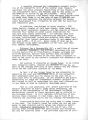
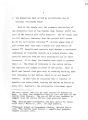
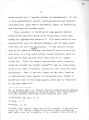
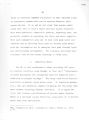
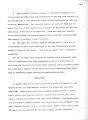
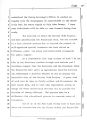
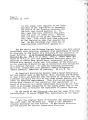
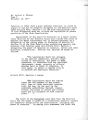
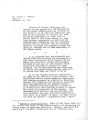
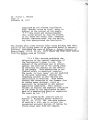
Show ?<p. 43 tion (in annual terms) is $10,460,000.* The "annual average equivalent allocated costs" of the irrigation areil2,786,000. Thus the irrigation part of the project, even using the BR's exaggerated agricultural benefits, produces a net annual loss of $2,326,000 per year. The B/C ratio on it is 0.82 even using 3 1/4% cost of capital. On the other hand, the preliminary BR analysis of a pump-back energy system indicates that annual energy benefits could be increased from $8.8 million to $31.5 million at an additional capital cost of about $60 million.** Using the BR 3.22 percent capital cost, this suggests a B/C ratio of 6.2! As discussed above, one cannot easily adjust the BR energy benefits to a different capital cost. If one accurately adjusted for a 7 percent capital cost, one would get a smaller B/C ratio of about 3.0--if one accepts BR data. Clearly, combining the irrigation project with the power project will produce an apparently rational project. However, one can have pump-back peaking energy without irrigation. The Corps of Engineers has inventoried dozens of places in the West which have the geographic features which allow this type of peak power production. Most have nothing to do with irrigation. The projects involve two storage basins and a continuous recylcing of the water: pumping it up during off-peak hours *BR, "Preliminary Information," op. cit. , point 5. **BR, "Bonneville Unit: Alternative Plans," March 21, 1977, no page numbers. |
| Reference URL |
https://collections.lib.utah.edu/ark:/87278/s6cc0zmc/1149593 |