| OCR Text |
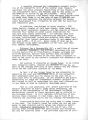
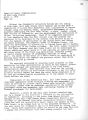
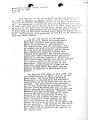
Show / c s Board of County Commissioners of Salt Lake County April 3, 1978 Page ten Salt Lake County's current population of nearly 550,000 people will increase by as many as 300,000 by the year 2000. This growth will continue in the next century. The increase m population and the accompanying water needs are not without bounds. A recent demographic study of Salt Lake County places< the ultimate holding capacity of the County at 1.4 to 1.7 million people, depending upon the final population density which is achieved. If it is assumed that the additional 300,000 people by the year 2000, will have not impacts on water use patterns and the current per capital consumption rates are not changed, an additional 85,000 acre feet per year of high quality water will be required by the year 2000 to meet the County's needs. If the ultimate holding capacity of Salt Lake County is achieved without any changes in water use patterns, a highly unlikely possibility, between 225,000 and 300,000 additional acre feet per year will be required. The expanded needs for water caused by an increasing population are not isolated events, however. When demands increase as the result of urbanization, three closely related phenomena _ occur which have significant impacts on water needs. First, increased prices which follow new, highly expensive water projects tend to reduce per capita demand. Second, increased population density lowers per capita consumption, primarily as a result of decreasing home lot size and reduced outside watering demands. Third, and most significant, expanding urban areas envelope irrigated 'farm acreage, freeing agricultural water resources for municipal supplies. These factors will be considered in more detail in the following pages. For the moment, however, it should be noted chat the urban dens ty impact could affect the ultimate water needs of the County by as much as 50% of the demands projected in the preceding paragraph. Moreover, the decreased per capita# demands which accompany increased urban density have a retroactive impact, affecting existing, as well as future demands for water Urbanization impacts on irrigated acreage will also yield as much as 340 000 acre feet of water per year for other uses-more water than is currently being used in the County for all non-agricultural purposes combined. This additional 340,000 acre feet has not been taken into consideration in current water resource evaluations. And a planned Bureau of Reclamation water management study has been deferred because of apprehension about the potential results which would identify changing use patterns and probably contradict current data which demonstrates a demand for the Bonneville Unit. In estimating future needs, however, the average annual rate of consumption is not a critical design criterion The most important criteria are the peak hourly and peak daily rates ot |